A phone screen. TikTok. A vertical video shot by a shaking hand. It’s night, bathed in the chaotic neon of Walking Street. Three Thai men in black security vests surround one Westerner. He is shouting. He waves his arms, stepping aggressively forward. A split second later, he is on the asphalt, while someone in a white shirt drags him to the side. 46 seconds. The video loops. You swipe up. There is another one. You swipe up again. Another one.
This happens every single day. Somewhere in Pattaya, there is a fight. A farang against a Thai. A Thai against a farang. The triggers are almost always trivial: a badly parked scooter, a disputed beer bill, a wrong look, a girl who smiled at the wrong table. We are not here to act as judges. In every specific incident, one person is usually at fault. But zooming out, the fault lies with a system. A system that functioned for decades, which a new generation has completely ceased to understand.
Pattaya is not Thailand. It is a highly specialized, isolated ecosystem built on one ruthless principle: absolute interdependence. The foreigner depends on the girl. The girl depends on the foreigner. The bar depends on both. The baht bus driver depends on the tourist, and the tourist depends on the driver.
This fragile web of survival cannot tolerate chaos. Because of this, the city developed rules. Not laws—the laws exist, but they are flexible. These are unwritten rules. A functional code of survival passed down from veteran expat to newcomer, from older Mamasan to new hire.
One of those core tenets is simple: Don’t bring your problems, hang-ups, phobias, bad habits, religion, or any other disorder you have to the bar, the street, or the beach. This is our home too. Don’t trash it.
This isn’t about being polite. It is a strict condition of coexistence. You can be whoever you want in your own country. Here, you are a guest. And a guest who acts like a landlord eventually gets hit in the face. Sometimes literally.
Rule One: Do Not Weaponize Your Emotions
In Western culture, venting your anger is considered a normal, even healthy, expression of frustration. In the Thai ecosystem, public anger is a catastrophic loss of face. For you, and for the person you are shouting at. The one who screams looks weak. The one who stays calm retains the power.
A tourist who thinks, “I paid my money, I have the right to be mad,” is making a fatal miscalculation. You have the right to pay and leave. You do not have the right to create a scene. The drunk guy who throws beer at a bouncer and takes his shirt off doesn’t lose the fight when the punch lands. He lost the fight the moment he raised his voice.
Rule Two: Never Argue Over Petty Cash
A Western man looks at a bar bill and sees mathematics. A Thai bartender looks at a bar bill and sees a social contract. If you stand there arguing over a 50-baht discrepancy, you aren’t being “economically smart.” You are broadcasting a total lack of respect.
Does this mean you won’t get overcharged? No. Everyone gets overcharged eventually. But how you react is the actual test. If you scream, if you threaten to call the police over 200 baht, if you refuse to pay “on principle,” you aren’t a crusader for justice. You are a tourist who doesn’t understand the grid. The rule is simple: Pay it. Leave. Never go back. Tell your friends. But do not make a scene. The scene will always cost you more than the bill.
Rule Three: The Camera is a Weapon
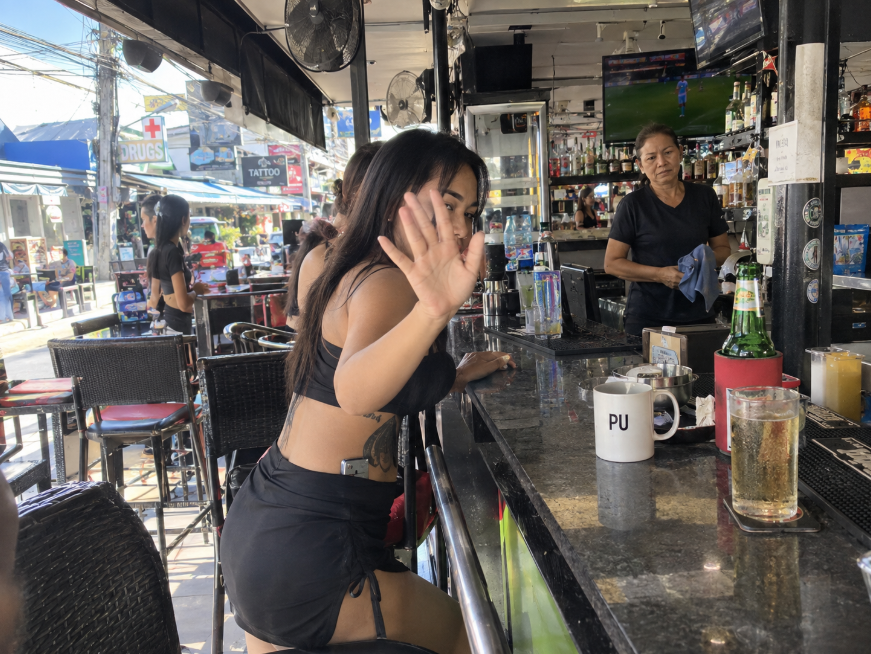
A smartphone in a foreigner’s hand is not just capturing a memory; it is an active threat. The girl in the bar doesn’t know where that video is going. She doesn’t know if her mother in Isaan will see it. She doesn’t know if it will be used against her, how many people will watch it, or what they will write in the comments.
The foreigner thinks: “I’m just filming for my vlog.” The girl thinks: “He is filming to expose me. I will be recognized. I will lose face.” The rule is absolute: Ask. If she says no, put it down. If you film her without permission and she notices, you have already violated the code. Whatever happens next is her reaction, not yours.
Rule Four: Money Does Not Buy Immunity
This is the hardest rule for newcomers to accept because the entire city is built on cash. You pay, you get. It seems perfectly logical. But it has limits.
Some foreign men, flush with a few extra dollars or euros, believe their spending money gives them a license to touch whomever they want, speak however they want, and treat the staff as disposable. You do not buy respect. You do not buy the right to humiliate. You are paying for time. When the time is up, you leave. The rules remain.
Why the System is Breaking
So why is the violence spiking? Why are the unspoken rules failing?
First, the content creator generation. A new wave of YouTube and TikTok streamers don’t come to Pattaya for a holiday; they come for content. They need drama. They provoke, they argue on camera, they disrespect the staff because a quiet, respectful night doesn’t get views. Outrage gets views.
Second, the veteran transmission line is broken. The old expats who used to sit at the corner of the bar and quietly pull a loud newbie aside to explain how things work are mostly gone. The new arrivals show up with a pre-written script: “I have money, I am the boss.” They don’t listen. They don’t ask.
Third, the internet has created a false sense of expertise. Guys read forums and watch vlogs, arriving with the belief that they understand Pattaya. They know the prices and the addresses, but they don’t know the rules. Information is not culture. The real rules aren’t written on forums because they have to be felt, not memorized.
Are we overthinking it? Maybe it’s just drunk guys, heat, and testosterone. Sometimes it is exactly that. Sometimes the Thai guy is completely out of line. Sometimes the farang is.
But there is an undeniable pattern. The clashes are increasing not because locals are suddenly more aggressive, or because foreigners are suddenly worse people. The clashes are happening because the old code is dead, and a new one hasn’t replaced it. The unspoken rules are fading into silence.
Leave a Reply