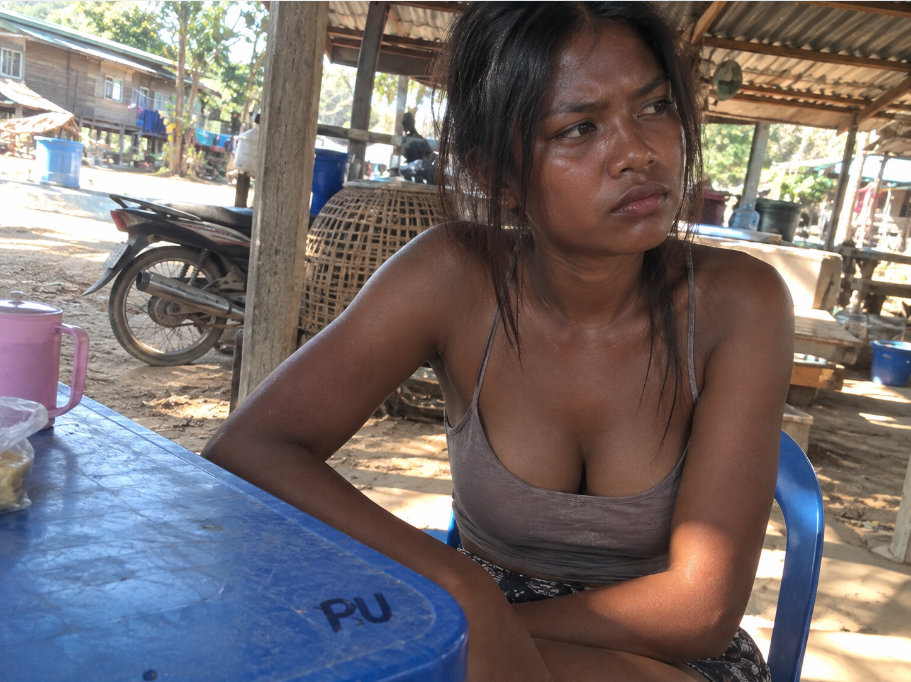
Editor’s Note: The following is an adapted transcript of a conversation with a real woman from Isaan. Certain identifying details have been altered for her privacy. The text has been translated and structured for an English-speaking audience, but the core narrative, the frustration, and the reality remain entirely hers.
I was eight years old the first time I heard my life plan. I was sitting on the wooden floor of our house in Isaan, and my aunt looked at my arms, baked dark from playing in the sun. She didn’t scold me. She just smiled, patted my shoulder, and said, “It’s okay. With skin that dark, you can just go to Pattaya or Phuket and get a farang husband.”
She said it like it was a compliment. A solid financial strategy. Over the next ten years, I heard variations of that same phrase from neighbors, from older cousins, from people passing through the village. It was never delivered as an insult. It was a cultural consensus. A life sentence passed off as friendly advice.
When you hear it systematically, year after year, you realize what they are actually saying. They aren’t telling you that you have options. They are telling you that your entire spectrum of human potential has been narrowed down to a single geographic coordinate and a specific demographic of aging foreign men. It meant that because of my melanin, I was already disqualified from the standard Thai dream. I wasn’t meant to be a university graduate with a Bangkok office job and a respectable local husband. My destiny was pre-written. I was an export product.
We’ve talked about the brutal mathematics of colorism before—the whitening creams, the AI filters, the market logic where pale skin equals wealth and dark skin equals the dirt of the rice fields. But academic statistics don’t capture the suffocating weight of sitting at a family dinner while people casually map out your future in a red-light district, simply because you have the “wrong” complexion for a Thai man.
So eventually, I stopped nodding. I looked at them and asked: Why?
Why is this the only path you see for me? Am I not smart enough for something else? Do I not have hands and a brain? Why do you insist that my only value in this world is being exotic to a stranger who can’t even pronounce my real name?
Whenever I ask this, the room goes completely quiet.
There is never an answer. The silence is heavier than the advice itself. My protest doesn’t fit their narrative. They only know two stories: the girl who goes to Pattaya and sends back enough money to build a concrete house, or the girl who stays in the village and starves. A dark-skinned girl demanding a third option disrupts the entire ecosystem. No one wants to hear the voice of the product questioning the supply chain.
The most terrifying part isn’t that they want to sell me. The terrifying part is that they genuinely think they are helping. This isn’t malice; it’s a cultural default setting. They are handing me the keys to a cage, smiling warmly, and telling me I’m lucky to have a place to go.
I am twenty-two now. I still don’t have an answer to my question. And they are still waiting for me to pack my bags and go south.
Leave a Reply