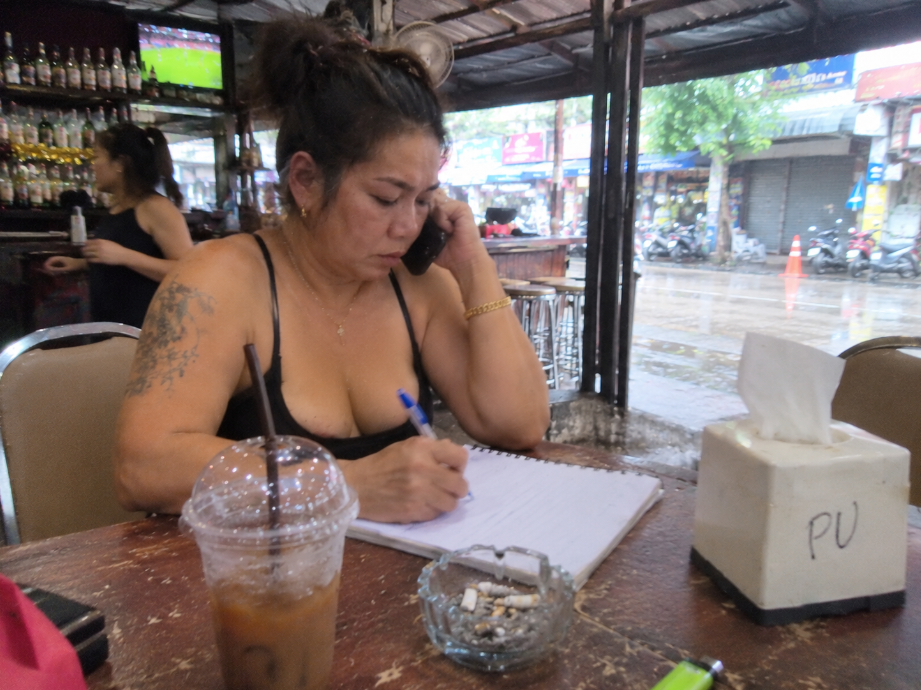
October 15 in Pattaya is a dead zone. The heavy monsoon rains are finally tapering off, but the November charter flights have not yet begun landing in full force. The streets are damp, the metal shutters on half the shophouses are still pulled halfway down, and the beer bars look like empty theaters between runs.
Inside a narrow, single-unit bar off Soi Buakhao, forty-nine-year-old Jae Pen sits at a corner table. In front of her is a glass ashtray, a sweating plastic cup of oliang iced coffee, and a cheap spiral notebook with curled corners. Inside is a list of twelve names and phone numbers written in blue ballpoint pen—her staff from last high season.
Every year on October 15, Pen makes the roll call. She does not post job ads on Facebook. She calls the ghosts of last winter to see who is coming back to work the stools.
The first three numbers do not even ring. Just the crisp, automated voice of the mobile carrier announcing that the number is no longer in service. In this economy, when a chapter ends, you snap a 49-baht SIM card in half and disappear.
The fourth call connects to a wall of wind and the heavy, rhythmic chugging of a diesel engine. Somewhere in a rice paddy in Roi Et, a woman shouts over the noise of a water pump. The harvest is late. Her brother went to work construction in South Korea, so she has to stay in the fields until the sacks are loaded.
On the fifth call, the background is a rapid, metallic clatter—dozens of industrial sewing machines running at full speed. A garment factory on the industrial outskirts of Samut Prakan. The girl speaks low so her floor supervisor will not hear. “I’ll think about it, Jae,” she says. Pen draws a small line through her name. She has lived long enough to know that a polite “I’ll think about it” is a permanent goodbye.
The sixth call is answered by the sharp, inconsolable crying of an infant right next to the microphone, followed by a hushed, exhausted apology. No further explanation is needed.
Number seven married a retired carpenter from Denmark in May and deactivated her old social media. Number eight took her high-season savings and opened a noodle cart outside a district school in Buriram. Number nine rings until it drops. Numbers ten and eleven bring static, vague promises for December, and the distant echo of a provincial bus terminal loudspeaker announcing departures—though neither of the women on the line is boarding anything.
Pen exhales, takes a sip of watered-down coffee, and looks at the twelfth name scribbled at the very bottom of the page.
It is a quiet girl from Khon Kaen who worked the floor last January—unremarkable, never the loudest in the room, never the top drink earner, someone Pen had completely stopped thinking about by April. Pen dials the number out of sheer habit, her thumb already resting on the cap of her ballpoint pen to cross it off.
The line clicks open.
There is no tractor engine. No sewing machines. No crying child. Just the steady, low vibration of heavy tires rolling over highway asphalt and the muffled air brakes of an intercity coach.
A calm voice answers on the first ring: “Jae? I’m already on the bus.”
Pen looks down at the notebook for a second. She does not smile, and she does not make a speech. She simply says, “Message me when you reach the bus terminal,” and ends the call.
She closes the spiral notebook, stands up from the table, grabs a damp cloth and a spray bottle of cleaner from behind the register, and begins wiping down the bar counter.
Leave a Reply