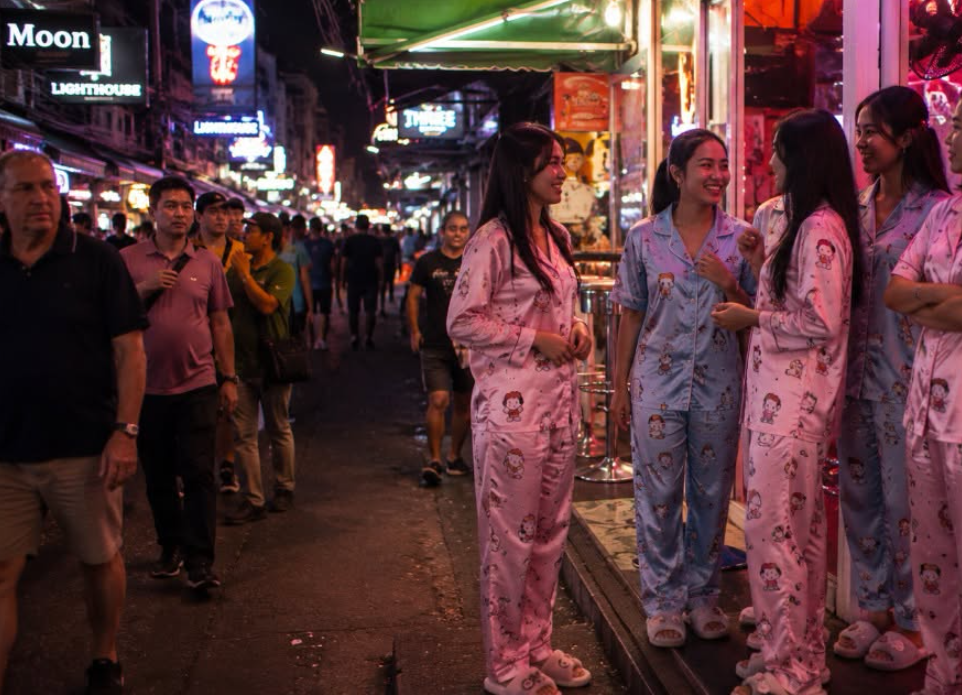
As someone who has spent my entire life in business development and marketing, I tend to look at the world—even the chaotic streets of Pattaya—through the lens of conversion funnels, consumer triggers, and market sustainability.
Recently, I was having a casual chat with the owner of a well-known network of bars on Soi 6. As expected, he was complaining. “There are barely any paying customers left,” he said. “96% of the people walking down the street are just tourists looking for free entertainment or content creators filming vlogs. They grab a girl’s hand on camera, tell her she’s beautiful for the views, and just walk away.”
Nothing new there, right? But it got me thinking from a purely analytical standpoint: Why is this actually happening?
Why should a customer actually step inside a Soi 6 bar when they’ve already received the entire product for free?
The Flaw of Absolute Exposure
In traditional marketing, if you show the entire value proposition upfront for zero cost, you destroy the incentive to purchase.
On Soi 6, the current model relies on sending girls out to the front of the bar in practically nothing but underwear. As a pedestrian, you walk down the alley and see everything. There is no mystery, no curiosity, and no unanswered question. You’ve already consumed the visual product completely for free just by taking a stroll.
The remaining 4% who actually walk into the bars and buy drinks? By the classic laws of marketing, a 3% to 5% conversion rate from cold traffic is actually a standard, decent metric. These are the high-intent buyers who came specifically for a service. But you cannot sustain a massive street of brick-and-mortar businesses on a low-intent cold traffic funnel anymore, especially when the other 95% are just draining the girls’ energy for TikTok content.
Why Go-Go Bars Still Win the Traffic War
Now, look at the contrast with classic Go-Go bars. They are often packed. Why? Because they understand the psychological trigger of exclusivity and curiosity.
The Heavy Doors: Go-Go bars keep their doors strictly shut. You cannot see what is inside from the street. This creates an immediate psychological itch—what am I missing out on behind that door?
The Dressing Code Outside: When Go-Go girls stand outside to recruit customers, they aren’t wearing their stage outfits. They are usually wrapped in silk robes or elegant, seductive dresses. It’s highly provocative, but it leaves just enough to the imagination. It forces the consumer’s brain to ask: What is she wearing underneath? I have to go inside to find out.
By the time the customer steps through the door to answer that question, they’ve already entered the monetization funnel. On Soi 6, that entire psychological bridge is broken.
The “Pyjama” Pivot: A Disruptive Marketing Thought
If I were consulting a Soi 6 venue owner today, my advice would sound completely counter-intuitive to the old-school Pattaya mindset: Make them put some clothes on.
Imagine the marketing disruption. You are walking down Soi 6, surrounded by a monotonous wall of neon and identical bikinis. Suddenly, you pass a bar where all the beautiful girls are wearing oversized, cute silk pajamas. Or long, casual t-shirts with denim shorts.
Suddenly, the pattern is broken. It creates massive visual contrast. It stands out from the noise. It looks approachable, intriguing, and domestic. It instantly triggers a different kind of curiosity and makes the venue memorable. In a sea of forced nudity, clothing becomes the ultimate differentiator.
The End of an Era, The Birth of a Pivot
The complaints from venue owners are highly symptomatic. The traditional, raw exposure model of the 1990s and 2000s is fundamentally dying. The market is oversaturated, consumer behavior has shifted toward digital media consumption, and tourists are looking for experiences rather than just raw accessibility.
When a long-standing business model begins to fail, it forces the industry to innovate or starve. The fact that owners are finally feeling the squeeze means the Pattaya nightlife market is on the brink of an evolution.
And as a marketer, that’s exactly when things are about to get interesting.
Leave a Reply