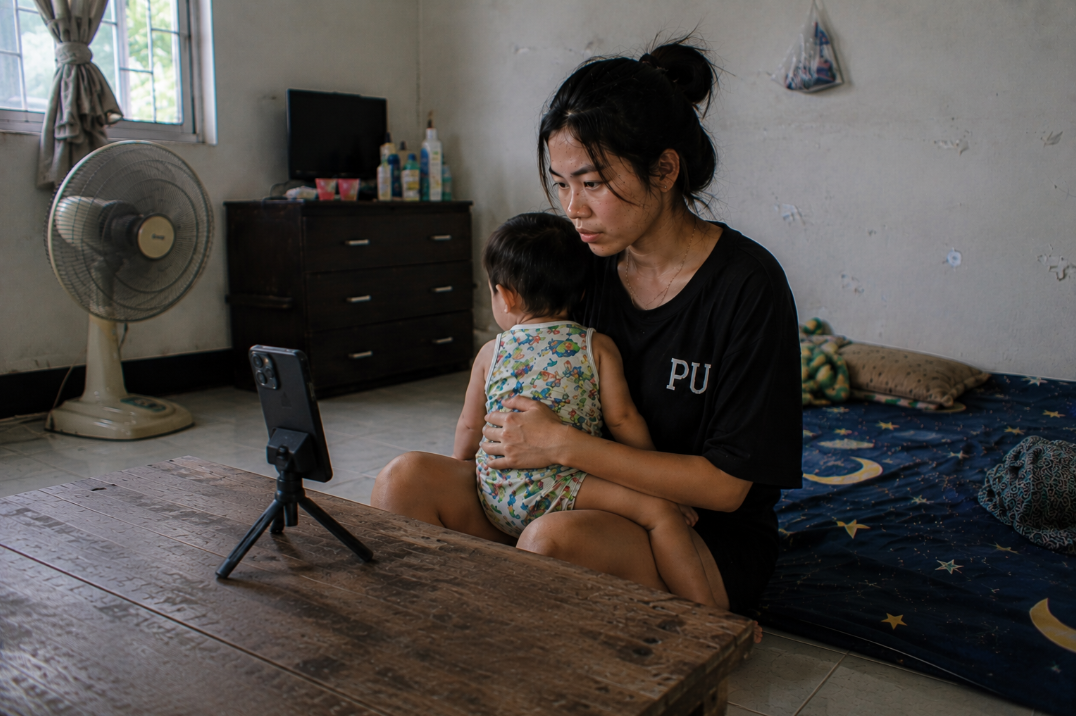
It was 2:00 PM in a suffocating, concrete rental room in East Pattaya. The air was thick and heavy, smelling of fermented fish sauce from an empty som tum bag and the stale smoke of cheap L&M cigarettes.
May sat on the floor, carefully adjusting the angle of her phone against a plastic water bottle. She had spent the last ten minutes scrubbing off her makeup, ensuring her face looked appropriately pale and exhausted.
Sitting on a torn mattress just two feet to her left, completely out of the camera’s frame, was her older sister. The sister was leaning against the wall, doom-scrolling TikTok on a cracked screen, blowing a cloud of gray smoke toward the ceiling. Crawling at her feet was her two-year-old son, sweating, cranky, and agitated by the afternoon heat.
May checked her phone screen one last time. The stage was set.
She reached over, scooped up her nephew, and held him tightly against her chest. The toddler, irritated by the sudden, restrictive grip, immediately let out a piercing, miserable wail.
Perfect.
May took a deep breath, forcing moisture into her eyes, and hit the video call button.
Six thousand miles away, sitting in the freezing, rain-lashed cabin of a work truck somewhere in Northern Europe, Martin’s phone buzzed. He smiled, taking a sip of cheap gas-station coffee, expecting his usual morning greeting. But when he answered, the smile instantly vanished.
Through the screen, Martin saw a terrified, bare-faced mother. He heard the agonizing screams of a sick child echoing through the phone speaker.
“Martin…” May whimpered, her voice trembling with manufactured panic. “I am so sorry to call you while you are working. He is burning up. The clinic doctor says it might be dengue. They need 4,000 baht for the antibiotics and the bed, and I have absolutely nothing left.”
Martin’s heart broke. The primal sound of a crying baby and the tears of the woman he was “sponsoring” triggered an immediate, overwhelming protective instinct. He started speaking rapidly, soothing her, promising that he was opening his Wise app right that second.
“Don’t cry, I’m sending it now. Get him to the hospital,” Martin pleaded.
Just out of frame, literally inches from the camera lens, the real mother of the child took another long, slow drag of her cigarette. She didn’t even look up from her TikTok feed. She had seen this exact performance three times this month.
“Thank you, you saved us,” May whispered, wiping away a flawless tear.
She tapped the red button. The screen went black.
The transaction was complete. Instantly, May’s face dropped its mask of despair, returning to a cold, deadpan boredom. She unceremoniously dumped the crying toddler back onto the mattress next to his mother.
The sister finally looked up from her phone. She exhaled a cloud of smoke, passed the cigarette to May, and asked: “Did he send it?”
“Yeah,” May replied, taking a drag and checking her banking app. “Four thousand. I’ll transfer you your cut in a minute.”
In the neon ecosystem, empathy is the most easily weaponized commodity. And the most dangerous thing about a long-distance relationship is the camera—because it only ever shows you the stage, never the backstage.
Leave a Reply