Yesterday, one of our readers left a brilliant comment under our post, sharing a perspective directly from the rural heartland of Thailand. He nailed something so deep that it deserves its own discussion.
When we talk about the backgrounds of the girls working the nightlife, most farangs look at the lack of school education or poverty. But that’s missing the point. The real issue is what our reader calls a lack of “emotional education” from their families. And this has nothing to do with being rich or poor.
Here is the brutal reality of how the cycle actually works.
The 12-Year-Old “Mom”
Go into almost any rural village, and you’ll see the exact same setup.
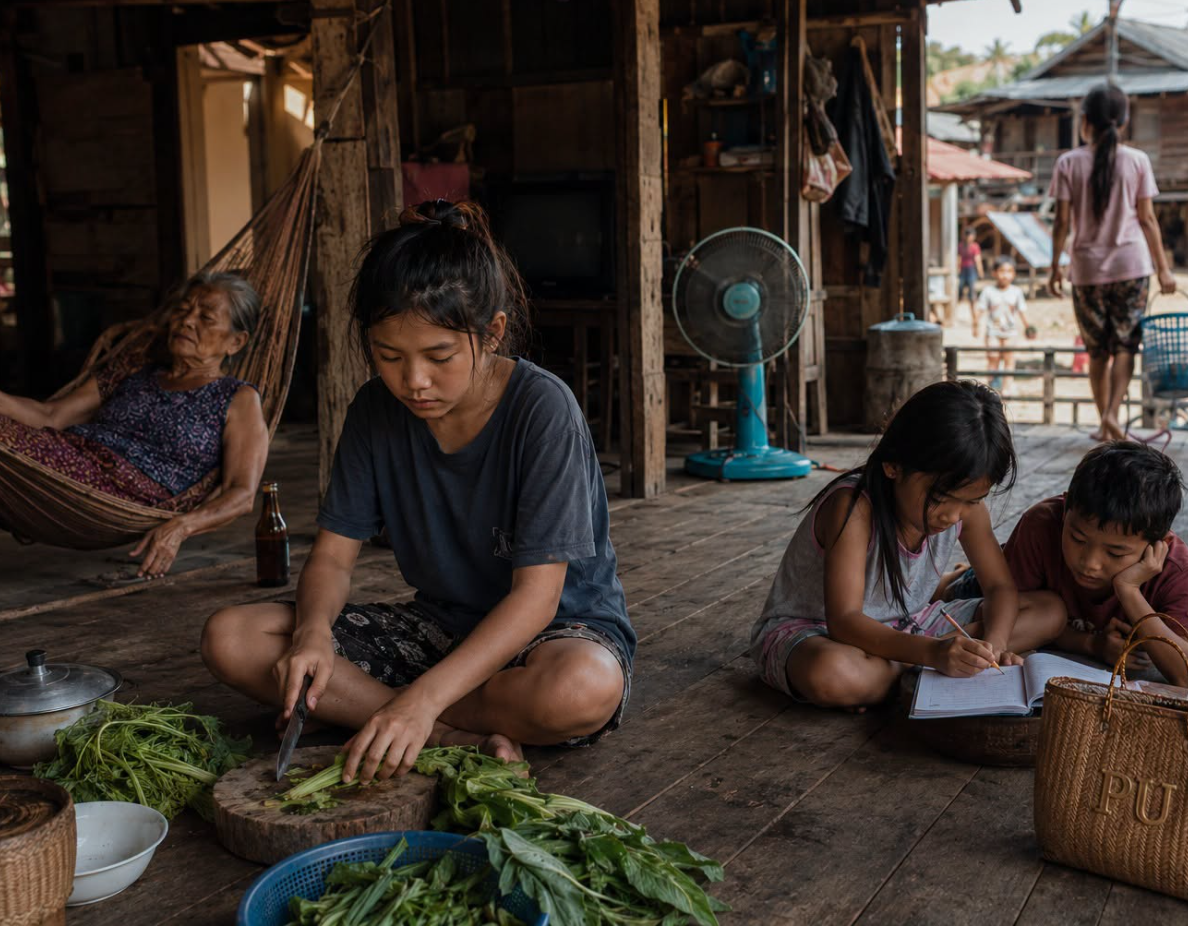
An 80-year-old grandmother lives with five grandkids. The grandmother is mostly drunk. The mothers of these children are all working in Pattaya, coming home maybe once or twice a year for a couple of days.
The oldest granddaughter is just 12 years old, but she’s already running the entire house. She cooks, cleans, does the laundry, grows vegetables to sell to neighbors, goes to school, and makes sure her younger siblings do their homework. She is incredibly responsible and hardworking.
But she has never seen a healthy example of a relationship between a man and a woman. The only thing she hears from her mother and grandmother is a single, repetitive line: “You need to be pretty so you can make money from men later.”
She has the work ethic to be an excellent nurse or a manager. But the moment she turns 18 and finishes basic school, her mother will pack her bags and take her straight to a Pattaya. Her younger sisters will follow the exact same path as soon as they are old enough.
The Invisible Wall
When these girls get to the bars, they are happy to learn things that directly help their daily job—like conversational English. But anything beyond that—getting a real degree, learning a trade, or starting a proper career—is completely outside their imagination. It’s an unknown world they have never witnessed. They simply stick to the emotional survival skills they learned as kids.
According to our reader, only about 2 out of 10 girls in the nightlife don’t actually “fit” this industry. These are the rare exceptions who enter for a specific, temporary emergency (like paying for a father’s funeral). The moment they find a way out—through education or a stable marriage—they disappear from the scene instantly.
But for the other 80%, the bar life is the only reality they understand. And that’s where the farang “Sponsor” steps in and completely breaks the dynamic.
The “Sponsor” Trap
When a Western man swoops in trying to “rescue” a girl by paying her to stay home, putting her through school, or buying her a business, he thinks he’s being a hero. But emotionally, he’s sending a hidden, toxic message: “You are not good enough as you are.”
Instead of feeling grateful, the girl feels a massive psychological distance. She feels downgraded, judged, and controlled.
And what is the predictable result? She runs right back to her local Thai boyfriend. Why? Because that is the environment she actually knows. With him, she is on the same level. No one is trying to “fix” her or teach her how to be a proper Western woman.
The Bottom Line
A woman with a solid emotional foundation sees a supportive partner as a genuine opportunity to grow together and keep the relationship equal. But in the nightlife scene, those cases are incredibly rare.
Trying to force a “sponsorship” relationship into a traditional family dynamic usually violates an emotional law. It might not make sense from a man’s logical perspective, but emotionally, it’s a dead end. Sometimes, the best thing you can do is let people live the life they know and walk away.
Leave a Reply