The Western man arrives in Thailand with a built-in “savior complex.” Pattaya spends years nurturing this sweet, intoxicating superiority complex in expats. In their worldview, a Thai family always means a dusty village in Isan, a leaning wooden house, a sick buffalo, and endless Western Union transfers. In this matrix, a white man making $3,000 a month working remotely is the undisputed king, the benefactor, and the absolute top of the food chain.
But sometimes, the system glitches. And this glitch shatters the male ego much harder than any infidelity.
He met her outside the bars and nightclubs. She had excellent English with a slight British accent, she never asked for money, and she always paid for her own lattes. When he asked about her background, she casually mentioned that they just had a “family business” in Bangkok. His Pattaya-conditioned brain immediately pictured a struggling street-food cart or a tiny, sweltering noodle shop. He thought he had drawn the winning ticket. He felt like a savior. Until she invited him to a family dinner in the city.
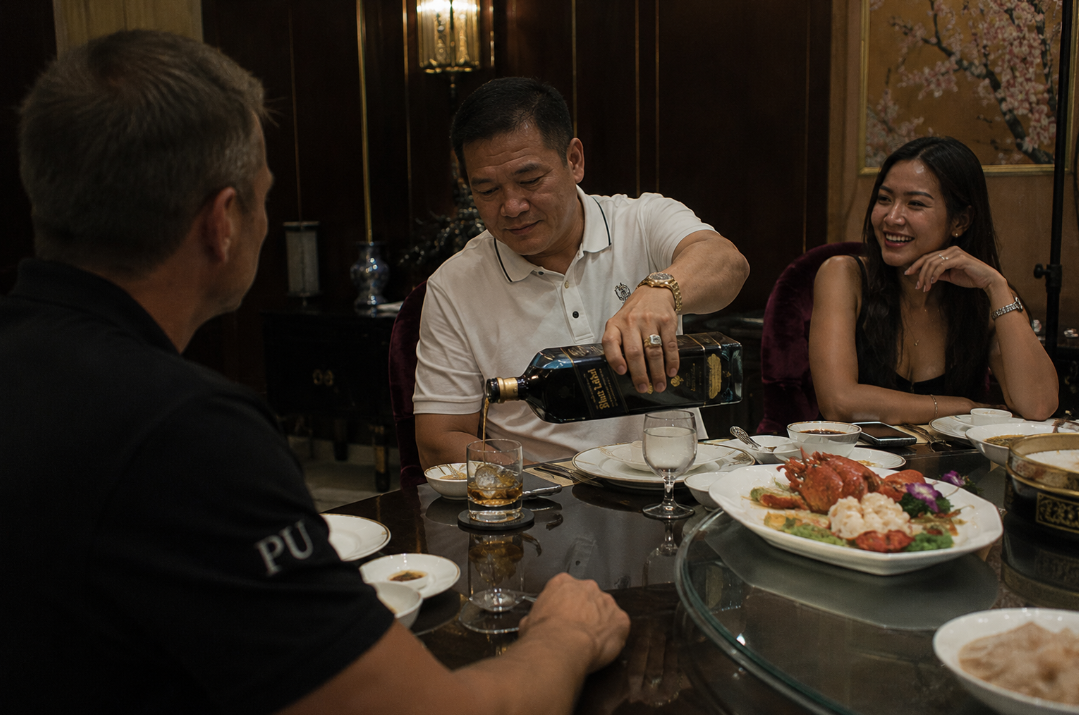
They didn’t go to a street stall. They walked into a private VIP room of an expensive Chinese restaurant somewhere in the Sathorn district.
There were no plastic chairs or the roar of motorbikes here. There was a thick carpet absorbing their footsteps, ice-cold air conditioning, and a heavy mahogany round table with a rotating glass center.
The door opened, and her father walked in. No faded t-shirts—a perfectly tailored polo, the calm, commanding gaze of a man used to giving orders, and a heavy, genuine gold Rolex on his wrist. This was the “family business.” He wasn’t flipping noodles; he was a formidable businessman, the kind who likely owned factories or supply chains. And he didn’t look at the farang with awe. He looked at him with polite, clinical interest.
A waiter silently placed a bottle of Johnnie Walker Blue Label on the table.
The father didn’t let the waiter pour. He took the heavy bottle himself and splashed it over the ice in the expat’s glass. The glass center of the table slowly rotated, offering dishes with imported lobster and abalone that cost more than this farang’s monthly studio rent in Jomtien.
The expat tried to save face. He started talking about his “online business,” his plans, and how much he loved Thailand. He tried to activate the alpha-male mode that worked so flawlessly in the bars of Pattaya.
The father listened carefully, smiled warmly, took a sip of his Blue Label, and said:
“That is very nice. It is good for a young man to have a little hobby so he doesn’t get bored.”
The word hobby sounded like a gunshot.
At the end of the evening, the waiter brought the bill in a black leather folder. The expat instinctively reached for his wallet out of habit to show his financial standing. But the father didn’t even look at the numbers. He simply placed a black metal card on top, continuing to tell a story about his recent golf trip to Japan.
In that split second, the expat shifted his gaze to his girlfriend, who was laughing sweetly at her father’s joke. He suddenly noticed the Cartier bracelet on her wrist, which he had previously assumed was just cheap costume jewelry.
The illusion collapsed. The glass wall shattered.
In that VIP room, he suddenly, crystal-clearly realized his place in the real, non-tourist hierarchy of Thailand. He wasn’t a savior here. He wasn’t the white lord pulling a poor Thai girl out of poverty.
To this family, he was just their educated daughter’s amusing, slightly poor exotic toy. A temporary, cute pet she enjoyed spending time with and practicing her English on.
Pattaya teaches farangs that money can buy anything here. But Bangkok brutally reminds them: the real money in this country does not belong to them.
Leave a Reply