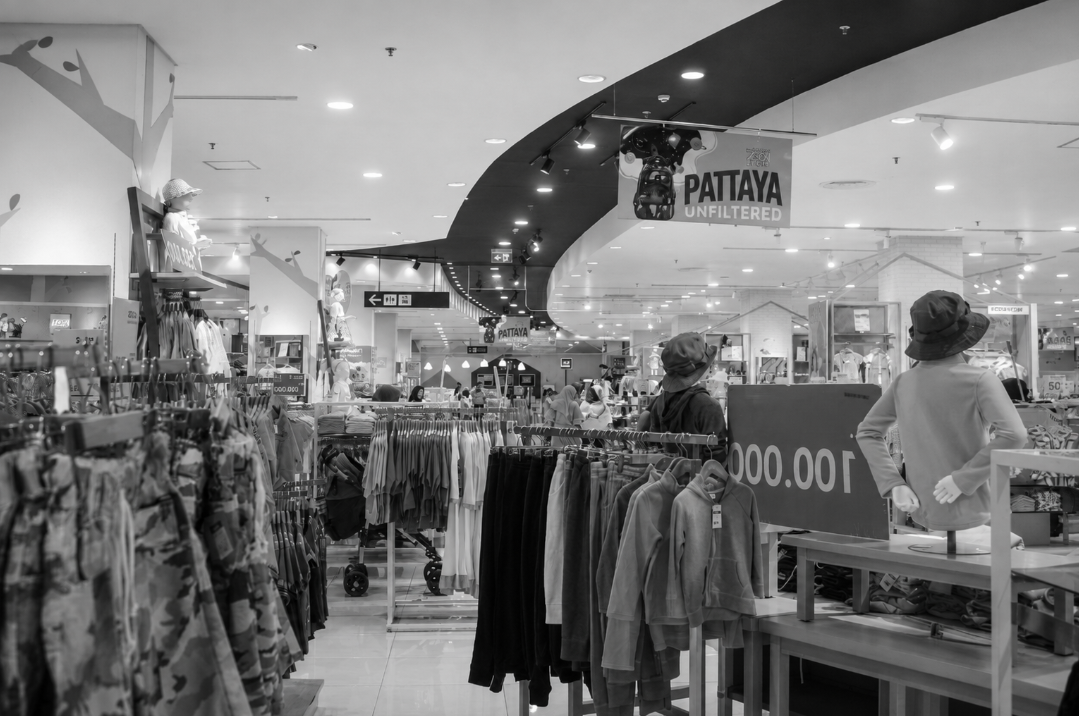
Yesterday, I found myself sitting in one of the restaurants inside Central Festival. To a casual observer, the scene looked perfectly respectable—perhaps even mundane. Foreigners sat with their partners, a family with a young child enjoyed a meal, and the hum of the mall provided a calm, climate-controlled backdrop.
But through the tinted glass of the restaurant, the scene felt less like a meal and more like a stage play where everyone was trapped in a cycle of longing for someone else’s life.
A woman sat with her back to me. She had a full-back tattoo—the kind of intricate, heavy ink that usually tells a story of either the yakuza or a decade spent on a specific Soi where the lights never turn off. She was composed, elegant, and dining with her child. When the child began to act out, she shook her head, calmly explaining why such behavior was unacceptable. I couldn’t help but feel she was desperately hoping her child would never become a protagonist in the same kind of drama she once navigated. She was dreaming of a life where that past remained buried.
Outside the glass, in the mall’s hallway, two very young girls stopped to look at the menu. They were clearly new to this fishing village—their eyes were wide, scanning the prices with a mix of awe and hunger. They lingered for a long time, dreaming of a day when they would have enough money to walk through these doors and eat here every single day.
Then, there was a couple nearby. A young foreign guy and a young Thai girl. Because of the tinted glass, there was no sound, but the scene was a silent scream. They were opening their mouths wide, pointing fingers at each other, their faces twisted in frustration. It was a classic “industry” blowout. Looking at them, you could see the exhaustion—both of them were dreaming that this would just end, that they could walk away and stop the performance.
And then, a veteran woman, sitting with a dignified elderly foreigner, caught the sight of the two girls outside. She watched them for a long time. Her expression wasn’t one of judgment, but of a hollow, aching recognition. She was seeing her own reflection in those two girls, dreaming of being back in their shoes—not because she wants the struggle, but because she misses the blank slate of a life that hasn’t been written yet.
It was a strange, heavy sensation. We were all in the same room, yet everyone was dreaming of a reality that belonged to someone else. The girls dream of the meal; the mother dreams of forgetting the path she took to afford it; the couple dreams of being anywhere but at that table; and the veteran dreams of the moment before the dream began.
This city is a carousel of projections. We look at the person next to us and assume their life is the finish line, never realizing they are looking back at us, wishing they were at the starting block.
Thank you for being here—for reading, discussing, supporting, criticizing, and dreaming with us.
SUPPORT THE PROJECT (ONLY FOR THOSE WHO WANT TO)
For those who find value in our research:
Get the Books: Dive deeper into the patterns.
FB Paid Subscription
Buy us a Coffee (or a Singha): On your terms, at your discretion.
All links can be found here.
Leave a Reply