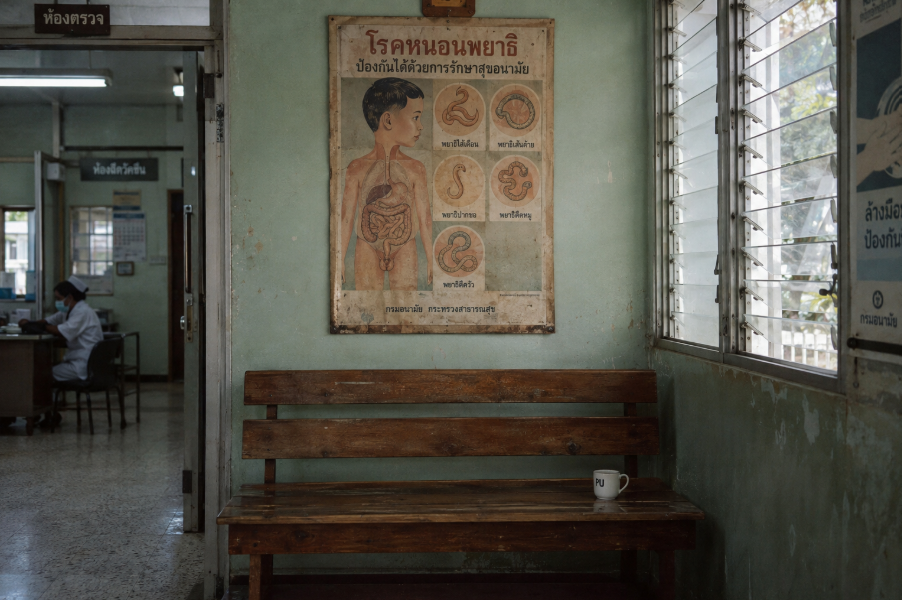
In the West, demographics is an endless moral battlefield. In Thailand, demographics is an engineering problem, solved with cold, surgical efficiency, completely bypassing ideology.
If you look at a chart of Thailand’s birth rate, you will see a cliff. Since the 1970s, the curve has plummeted into an abyss. Western logic suggests that this kind of drop is the result of a sexual revolution and accessible abortions. But here is the system glitch: throughout the entire 20th century and right up until 2021, abortions in Thailand were strictly criminalized, with exceptions only for severe health threats or cases of rape.
How did the country completely crash its birth rate if terminating a pregnancy meant a prison sentence? The answer lies in incredible Thai pragmatism.
Long before the government launched massive family planning campaigns, the society found its own way out. In 1968, researchers surveyed women in a Bangkok suburb and were shocked to discover that 14.8% of women and 8% of men of reproductive age had already been voluntarily sterilized. Nobody could figure out where this sudden trend came from. The reality was that the culture simply had no religious or moral barriers against the scalpel. Thais looked at the brutal economics, realized they couldn’t afford five children in a rapidly urbanizing world, and quietly went in for surgery.
Instead of fighting it, the government simply took charge of the process and industrialized it.
In 1972, the state established a fixed, very low price for the procedure. By 1978, the number of sterilizations skyrocketed by 5.2 times—reaching 170,000 operations a year. By 2002, the social security system made the procedure completely free for all citizens. In 2014, the focus shifted: the state began providing free reversible implants and IUDs to women under 20 to curb teenage pregnancy. And all of this was strictly voluntary, without coercion, driven entirely by economic survival.
But Article 301 of the Criminal Code regarding abortions remained untouched, preserving the nation’s “Buddhist face.” Doctors and women regularly faced trial. This status quo held for decades, until the system encountered a brilliant legal hack in 2018.
Obstetrician-gynecologist Dr. Srisamai Chueachart was arrested for performing abortions with the consent of her patients. Instead of quietly taking a plea deal, she went straight to the Constitutional Court. She didn’t appeal to pity or emotion. She asked the system a question based on cold logic: conception is a process involving two people. If the Thai Constitution guarantees gender equality, why does only the woman go to prison under Article 301, while the man faces absolutely no consequences?
In 2020, the Constitutional Court found itself backed into a corner. Upholding gender equality meant the government either had to start throwing men in prison en masse—which would cause chaos—or decriminalize abortion for women.
The state, as always, chose the path of least resistance. In 2021, the parliament rewrote the law, legalizing abortions up to 12 weeks. In 2022, the limit was extended to 20 weeks.
Legalization happened just five years ago. But the birth rate collapsed decades ago. This is absolute, ironclad proof of the ecosystem’s main rule: bans do not work. When a society faces the very real threat of poverty, it will always bypass the rules and find a mechanical tool for survival.
Leave a Reply