Western men arrive in the neon grid of Pattaya completely convinced they are the main characters of the ecosystem. They bring heavy cultural baggage: the need for romance, the demand for exclusivity, and the desperate, underlying desire to be a savior.
But if you look closely at the upper mechanics of the industry, you quickly realize the Western playbook is exhausting, inefficient, and deeply flawed. There is a completely different tier of player who actually understands the source code of the matrix: the East Asian sponsor.
The Western “farang” tries to buy a girlfriend. He monitors WhatsApp timestamps at 1:00 AM. He asks, “Who were you with?” He demands absolute emotional fidelity in exchange for his monthly wire transfer. He wants the commercial reality to disappear so he can feel genuinely loved.
The Japanese or Korean sponsor operates on an entirely different firmware. They do not force a romantic comedy onto a commercial grid. They treat the arrangement exactly for what it is: a highly efficient, pragmatic B2B transaction. There is no jealousy, no digital stalking, and no illusion of exclusivity. They set clear financial KPIs, they pay the subscription fee, and in return, they expect zero headaches when they are in town.
Because the Asian sponsor understands the rules of the game, the game often rewards them with pure, unfiltered irony.
Consider a well-known ecosystem scenario: A Japanese “shareholder” of a girl working on Soi 6 flies into town. While he is here, they live together in her condo. One night, while they are lying in bed watching TV, her phone lights up. It’s one of her Western “boyfriends” calling from Europe.
The Westerner, fueled by distance and green-dot paranoia, transfers a quick 5,000 baht during the call, just to assert his dominance and prove he is still taking care of her. The girl politely says thank you, hangs up the phone, and without missing a beat, opens the Grab app. She immediately uses the Westerner’s money to order a massive, premium sushi boat for the Japanese guy lying next to her.
He doesn’t even particularly like sushi. But the sheer mechanical poetry of the moment is undeniable. The Western ego literally funded the Asian pragmatism.
This lack of emotional drama makes the Asian model the ultimate prize for local women. A Japanese sponsor means reliable income without the suffocating psychological audit. But post-COVID, the demographic of Japanese expats spending heavily in Pattaya shrank significantly.
The ecosystem, however, is a living organism. It adapts.
If the capital doesn’t come to the neon grid, the grid travels to the capital. This has birthed a new, quiet phenomenon: the Si Racha weekend tour.
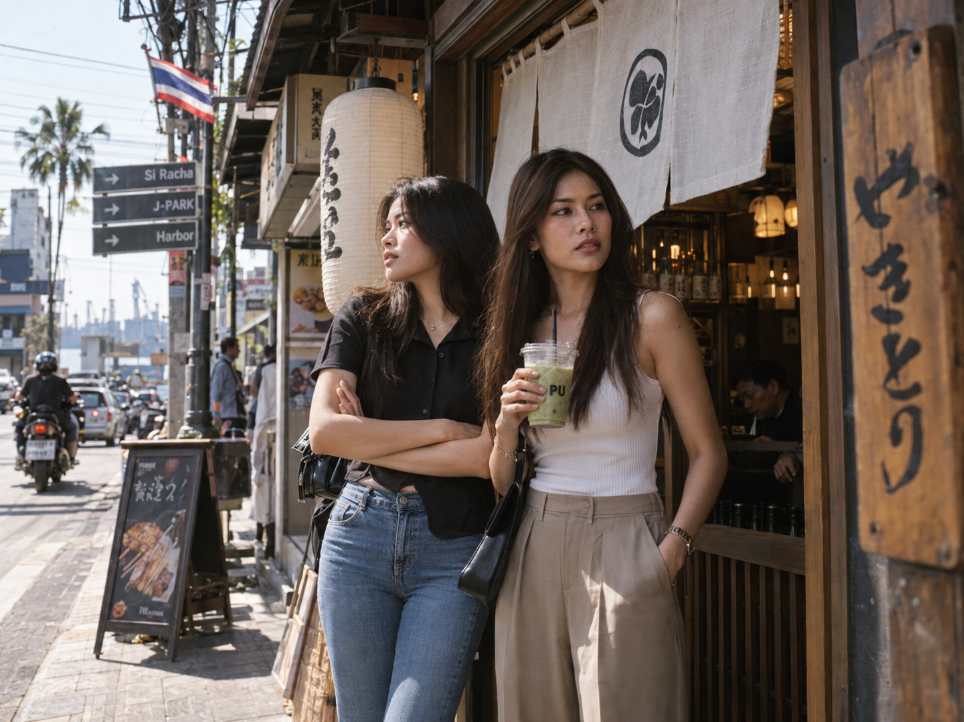
Located just up the coast, Si Racha is Thailand’s “Little Osaka,” packed with Japanese corporate executives and engineers working in the nearby industrial estates. Today, savvy Pattaya girls are using their days off not to sleep on the beach, but to commute to Si Racha. They dress well, sit in authentic Japanese restaurants, wander the aisles of Don Don Donki, and frequent local Izakayas. It is not tourism; it is a highly targeted corporate headhunting mission. They are looking for investors who don’t ask about green dots on ThaiFriendly.
The tragedy of the Western man is that he is constantly fighting a ghost. He exhausts himself trying to rewrite the rules of a commercial ecosystem to protect his own ego. The Asian sponsor simply reads the terms of service, accepts them, and eats the sushi.
Leave a Reply