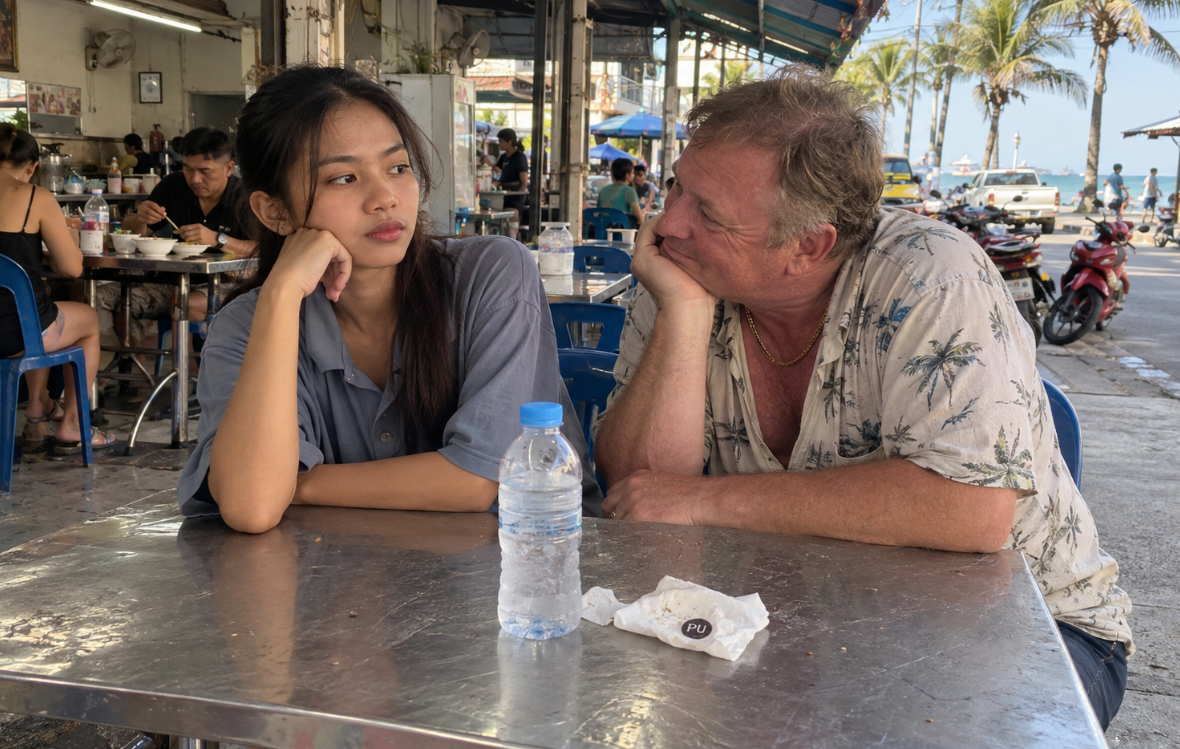
Every veteran of the grid has watched this cycle play out.
A Farang gets his heart broken. He discovers that his exclusive Girlfriend Experience was actually a highly diversified portfolio. He realizes the “brother” was a sponsor from Rome, and the sudden hospital bills for the family buffalo were just micro-upsells. He is hurt, bitter, and humiliated.
But instead of packing his bags, his ego pivots. He has an epiphany: The problem wasn’t me. I just picked the wrong type of girl.
He declares to anyone who will listen that he is completely done with the nightlife industry. He is now looking for a “normal” girl. An “authentic” Thai woman. Someone innocent, who works a regular job, who has never set foot in a go-go bar, and who has never even considered dating a farang. He hopes that by resetting the board and finding a civilian, the relationship will finally be honest, pure, and free of the transactional mechanics of the grid.
And where does he begin this noble quest for untouched, traditional authenticity?
Soi Buakhao.
Or he opens Tinder and sets the radius to 2 kilometers from Tree Town. It is the absolute pinnacle of farang delusion. It is the equivalent of walking into a casino to look for someone who doesn’t like money.
But let’s put the geography aside and look at the cold socio-economic reality. Let’s look at this genuinely “authentic” Thai woman he is searching for.
She has a regular job, maybe in an office or a bank. She is deeply embedded in her local family structure, speaks little to no English, and her social life revolves around Thai culture, Thai food, and Thai social media.
Now, ask yourself the brutal question: What exactly does a traumatized, middle-aged foreign man who doesn’t speak Thai, doesn’t understand her culture, and carries a massive amount of emotional baggage from the red-light district offer her?
Nothing.
An authentic, middle-class Thai woman does not need a foreign savior because she doesn’t need saving. She has a Thai boyfriend or husband who understands her world, laughs at her jokes, and integrates seamlessly into her family. To her, a farang is not a romantic upgrade; he is a massive cultural and communicative liability.
But here is the punchline of the Pattaya ecosystem: The burned expat eventually finds her anyway.
He meets a girl in a quiet coffee shop, or a modest street-food stall. She wears simple clothes. She tells him she hates the bars. She looks at the ground shyly and tells him he is the very first foreigner she has ever been on a date with.
He thinks he won. He thinks he finally beat the system and found the mythical unicorn.
He didn’t beat the system. The system just read his data and changed its marketing strategy.
The grid is incredibly adaptive. When the market is flooded with farangs who are traumatized by neon lights and bar fines, the supply simply adjusts. The girl he found didn’t escape the industry—she just rebranded. She recognized his trauma immediately. She saw a man terrified of “bar girls,” so she took off the makeup, put on a polo shirt, and sold him the exact “innocent civilian” package he was desperately looking to buy.
In Pattaya, you don’t escape the transactional economy. You just move to a different marketing funnel.
Leave a Reply