She sits at a small vanity table, finishing her makeup. Eyeliner, setting spray, a careful adjustment of the strap on a simple black dress. In the mirror, everything aligns—the posture, the voice, the silhouette.
Before stepping out the door, she picks up a small blue-and-white Thai national ID card from the dresser and slips it into her clutch. On that piece of laminated plastic, the photograph belongs to someone from years ago, the birth name is one she never answers to, and the legal title printed before it reads Nai—Mr.
In Thailand, social visibility is high, yet official documentation remains tied to birth registration. Even after years of living as women, the title on the card does not change. In the formal economy—corporate offices, banks, and traditional companies—presenting a female appearance alongside a male legal title often creates quiet friction. Applications are politely set aside. As a result, the nightlife sector becomes one of the few industries with an open door.
Once inside that ecosystem, a specific reputation is already waiting. Local news headlines and tourist forums relentlessly amplify stories of late-night pickpocketing and missing watches, compressing an entire demographic into a single, rigid label: the “thieving ladyboy.”
Later that night, at a corner bar off Second Road, a foreign visitor in his forties strikes up a conversation with her.
Experienced professionals in Pattaya do not hide who they are; concealing it wastes time and creates dangerous situations later. Within the first two minutes, over the noise of the street, she leans in and states it plainly: “I am ladyboy, okay?”
He smiles, waves a dismissive hand, and buys her a drink. Under the warm bar lights, flattered by her attention and proud of his own open-mindedness, he says: “No problem at all. You look amazing.”
She smiles back, clinks her glass, and keeps the conversation light. Yet she is already watching his eyes, waiting for a shift she has seen dozens of times before.
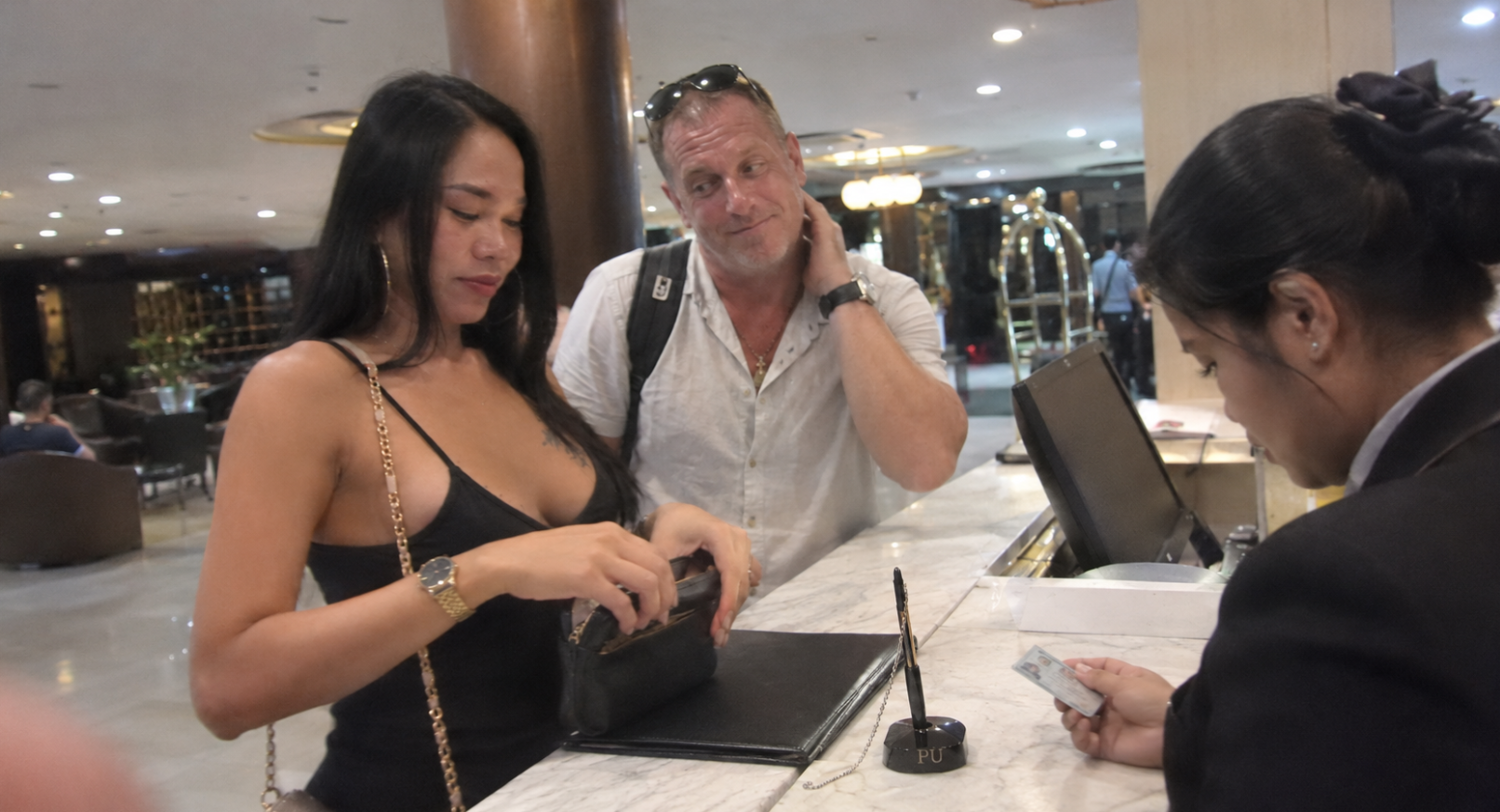
The shift arrives under the bright fluorescent lights of the hotel reception desk, during the routine ID check required by local security.
She hands her card across the counter. Even though he already knew verbally, seeing the official government ink—Nai—next to an old pre-transition photograph hits differently. In the bar, it was an abstract label. On laminated plastic, it becomes stark, undeniable bureaucracy.
The moment the fantasy collides with the paperwork, every barstool warning and internet thread he has ever read rushes in to fill the silence.
He looks up from the card to her face. The easy charm from ten minutes ago is gone, replaced by a rapid, involuntary calculation. His eyes flick toward his wristwatch, then to the pocket holding his wallet.
Trying to cover the awkwardness, he forces a tight smile and delivers a line meant to sound like banter: “You’re not going to steal anything from me, are you?”
It is phrased as a joke, but it lands like a verdict.
She takes the card back from the receptionist and slides it into her purse. She offers him a smooth, practiced smile—professional and entirely hollow.
Even when you follow every unwritten rule of the city and lay all your cards on the table from the very first minute, a single word printed on a piece of plastic is enough to erase you as an individual—turning you back into a category, a stereotype, and a calculated risk.
Leave a Reply