Every few weeks on Thai forums and TikTok, a twenty-year-old girl posts the same question from a burner account: “Should I go work in a bar in Pattaya for six months just to clear my family’s debt?”
The sharpest warnings in the comments rarely come from angry men. They come from older Thai women, and they almost always repeat the same blunt line: Think carefully. Once you take the surname “sao bar” (สาวบาร์), you wear it for the rest of your life.
Most foreign men in Pattaya never understand this. From the outside, it looks like money erases everything in Thailand. They watch a woman trade a cramped studio off Soi Buakhao for a proper wedding, a European surname on her passport, a white SUV, and a quiet townhouse in a gated moo baan outside Bangkok, and they assume the story ended in victory. Clean slate. Problem solved.
Inside Thai society, the math doesn’t work that way.
Take a woman in her late thirties who left the bars eight years ago. She married a quiet, steady Dutch engineer she met during her last high season. No scams, no drama, no hidden boyfriends in the province. Today she wears loose linen trousers and flat leather sandals, keeps her makeup light, speaks soft, careful Thai, and drops their seven-year-old son off at a bilingual school in Nonthaburi.
Nobody ever insults her to her face. That isn’t how Thailand works.
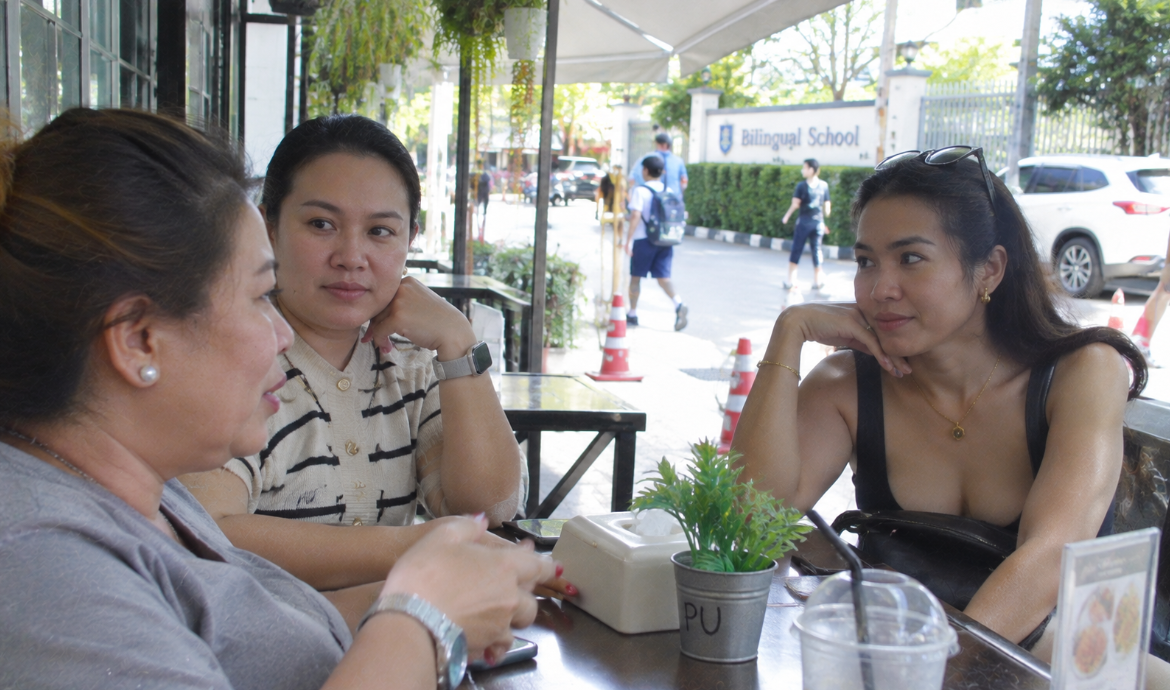
Instead, it happens in the small pauses. She is sitting in the café outside the school gate with two other mothers from the housing estate, trading complaints about homework and traffic, until the conversation inevitably drifts to the polite small-talk question: “Where did you and your husband meet?”
She has had her answer ready for years. “I managed a small restaurant in Chonburi,” she says smoothly. Or, “Through a friend when he was working near the eastern industrial estate.”
The other mothers smile warmly and nod. “Oh, how nice.” Nobody challenges her. Nobody asks follow-up questions. They simply let their eyes drop for half a second—doing the quiet calculation of her regional accent, the twelve-year age gap, the exact phrasing of “Chonburi”—and ten minutes after she drives away, a private LINE chat between two of them lights up with a single sentence: Definitely Pattaya.
That shadow stretches so far that even Thai women with university degrees who met their foreign husbands in a Silom corporate office complain online about getting the exact same sideways glance at department stores in Bangkok. The scan is automatic: tanned skin, an older white man carrying shopping bags, a woman translating his clumsy English for the clerk. For a woman who actually did work the strip, that look lands twice as hard—because she can’t push back or get indignant without risking someone digging deeper.
Even going back to the home village doesn’t fully wipe the record.
On the surface, the money buys warmth. The concrete house has a solid tiled roof, her father drives a reliable pickup, and the neighbors greet her politely at temple fairs, praising her as a dutiful daughter who took care of her parents. Yet behind shuttered wooden windows, the exact same aunties who eat the pork barbecue she paid for still point toward her house when lecturing their teenage nieces: “Study hard, or you’ll end up going down to Pattaya like her.” Cash buys comfort, favors, and polite silence. It almost never buys back full respect.
Twenty years ago, a woman could move to Europe or Chiang Mai, close the door, and let the past fade out. Today, the internet makes sure nobody fully escapes their old address. An old coworker from Soi 7 pops up in the comments under a modest family photo, calling her by her old bar nickname. A cousin gets drunk and shares a seven-year-old Facebook memory from a neon-lit table. One careless tag can crack five years of careful reinvention in ten seconds.
The strangest part is that her foreign husband almost never sees any of it. When a boutique clerk in Bangkok gives his wife a flat, uninterested look before turning bright and deferential to a wealthy Thai couple in tailored clothes, he assumes the clerk is just tired. When the neighborhood wives politely stop inviting her to weekend lunches, he figures locals just stick to their own families. He doesn’t speak the language well enough to hear the hairline crack between genuine warmth and polite distance.
On her marriage certificate, she carries a Dutch last name. On the land deed, she owns her home outright. By every measure a foreigner understands, she made it out. Yet every time she walks into a room full of middle-class Thais, she still braces herself for the unspoken surname—the one Pattaya stamps onto you the first week you clock in, and never quite lets you wash off.
Leave a Reply