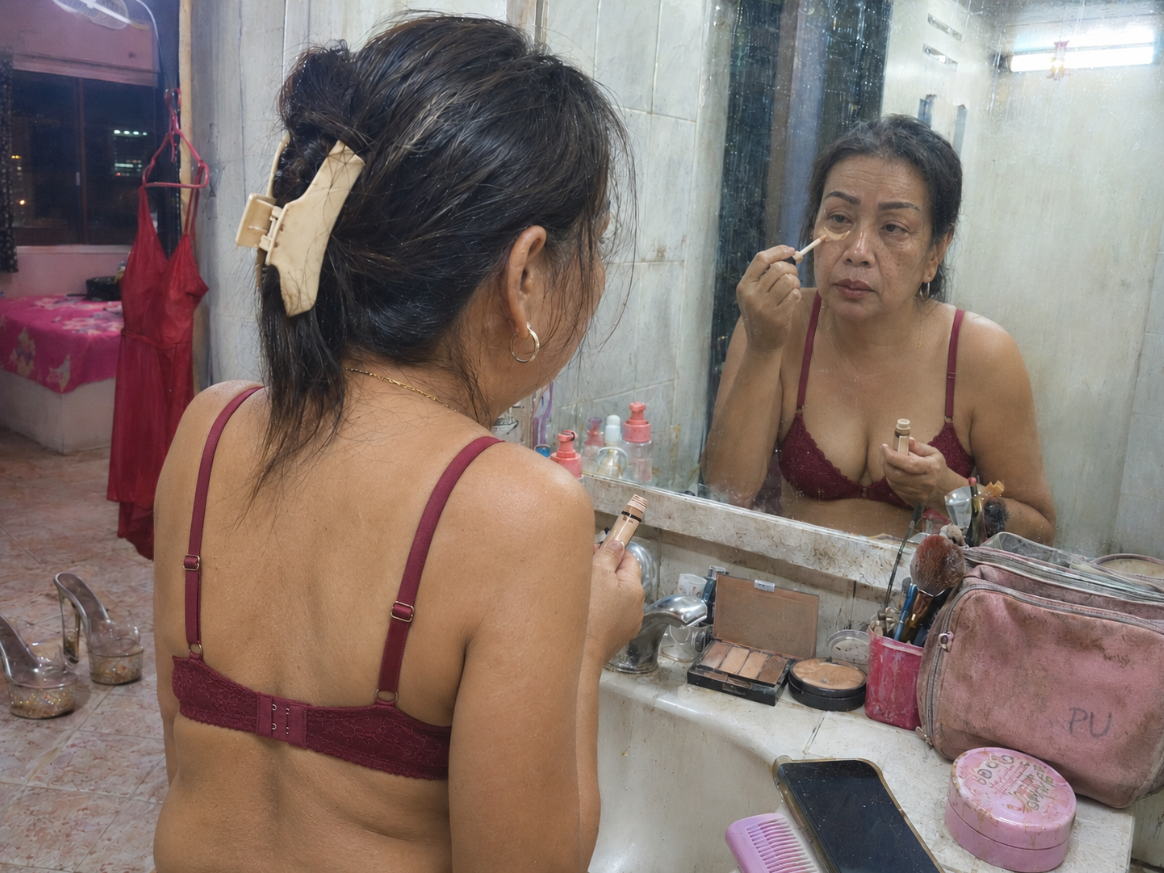
At forty-seven, the illusion takes an hour and a half to construct. When she was twenty-two, she could roll out of bed, drag a brush through her hair, slide into a cheap neon dress, and pull three bar fines a night just by standing in the doorway. Now, she sits under the harsh fluorescent bulb of her bathroom mirror, carefully applying industrial-grade concealer over the geography of the last twenty-five years.
She is a veteran. She survived the absolute golden era of the grid. Back in her prime, she was a financial force of nature. She bought the four-door Isuzu pickup for her mother. She paid the tuition for two nephews to go to a decent technical college in Korat. She cleared the farm’s fertilizer loans. She built the concrete wall around the family compound. For two decades, she was the undisputed matriarch of her village, an economic engine fueled entirely by European pensions and foreign naivety.
But the grid is a depreciating asset, and the biological clock of this city is merciless.
The market has shifted. The guys walking down the soi don’t look at her anymore. They look right past her, their eyes locked on the twenty-year-olds who film TikTok dances between lady drinks. The younger girls call her “Phi”—older sister. It is a traditional title of respect, but in this specific zip code, it is a polite death sentence. It means you are no longer the product; you are part of the furniture.
Her body is completely worn out. Her knees pop when she stands. Her lower back throbs after six hours on a cheap vinyl bar stool. She is physically and emotionally exhausted down to her marrow.
But the family doesn’t know that, and the family doesn’t care. Every month, without fail, the Line messages arrive from the village. They never ask how she is feeling. They never ask if her feet hurt or if the tourists are tipping well. They simply ask if the transfer is coming today or tomorrow.
Foreigners often look at the older women sitting in the shadows of the bars and wonder why they don’t just pack up and go home. They don’t understand the architecture of the trap. She can’t go home. Home is not a sanctuary; it is a massive, gaping mouth that she personally trained to eat cash. She created a standard of living for her relatives that she is now condemned to finance until she drops.
“If I stop,” she mutters to the empty bathroom, locking her phone screen, “what are we going to live on?”
She puts her makeup away, forces her tired feet into a pair of platform heels, and pushes the door open into the humid night. The Phi goes back to work. Because if she stops walking, the illusion of the successful daughter shatters, and the whole village goes broke.
Leave a Reply