Sit on any barstool between Second Road and Soi Buakhao for more than forty-eight hours, and you will hear the oldest punchline in Pattaya.
Some guy with sunburned shoulders and a fresh cold beer will lean over the counter, smirk into his glass, and say the magic words: “Guess what? Her buffalo is sick.” The whole row erupts. Men who have never stepped fifty kilometers north of Sukhumvit Road slap their knees and trade knowing glances, congratulating themselves on seeing straight through the local playbook. To them, the sick buffalo isn’t an animal—it is a meme, a punchline, universal shorthand for a naive tourist getting rinsed by a scripted sob story.
Four hundred kilometers northeast, out past the concrete sprawl and down a red-dirt track in rural Isaan, nobody is laughing.
It is five-thirty in the morning, right at the razor-thin edge of the rice harvest. The air smells of damp clay, woodsmoke, and diesel exhaust. A fifty-eight-year-old farmer stands barefoot in the mud beside a twenty-year-old pickup truck—a battered, rust-eaten workhorse held together by bailing wire, mismatched tires, and stubbornness. Beneath the open hood, thick black oil is bleeding onto the dirt from a cracked engine block. Two fields over, his neighbor’s aging swamp buffalo—the only other heavy muscle in the village—lies wheezing heavily in the shallow water, refusing to stand after an infection went untreated for three days.
To a guy drinking draft beer in Pattaya, this sounds like a bad comedy routine. To a family living on two acres of sticky rice, it is an extinction-level event.
In the villages of Buriram and Kalasin, there are no savings accounts, no comprehensive insurance policies, and no safety nets. Every household operates on a brutal, annual tightrope. Families borrow money in May to buy seed and fertilizer, praying the monsoon cooperates so they can harvest in November, pay off the agricultural bank, and survive until spring. The margin between eating and starving is measured in days.
If the harvest doesn’t reach the mill before the unseasonal rains hit, the grain rots in the stalks. If the truck isn’t hauled to a roadside mechanic and rebuilt within forty-eight hours, or if the vet from the district town doesn’t arrive with antibiotics before sundown, an entire year of backbreaking labor evaporates into nothing. And when the bank says no, the only door left open belongs to the local village loan shark, who happily hands over twenty thousand baht in crumpled bills at twenty percent interest per month—a trap designed so the principal can never be repaid.
At nine o’clock that night, the phone buzzes on a sticky wooden table inside a noisy, neon-lit bar in Pattaya.
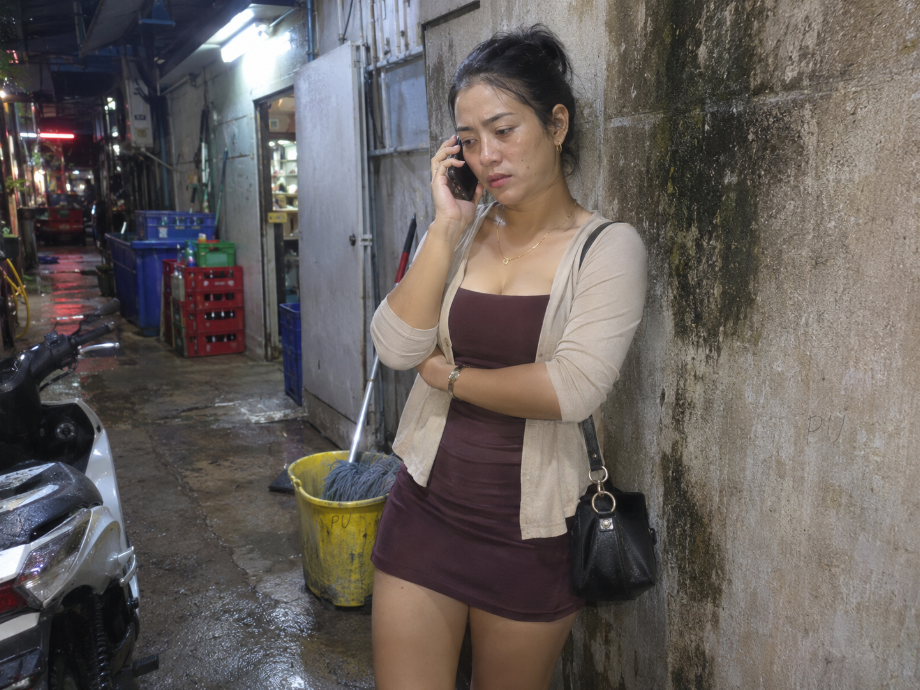
Noi is twenty-six. She wipes condensation off her glass, steps away from the thumping bass into the humid alley out back, and presses the phone to her ear. On the other end is her mother, speaking in rapid, breathless Isaan—no theatrics, no crocodile tears, just the flat, suffocating panic of a woman watching the roof cave in. The truck is dead. The harvest is sitting in the field. The mechanic wants twelve thousand baht up front for parts before he even touches a wrench.
Noi leans against the damp concrete wall and closes her eyes.
She knows the rules of the city she works in. She hears the foreign men at the bar mocking the stories every single night. She knows that the exact second she types the words father’s truck or water buffalo into a WhatsApp message, she will instantly turn herself into a walking cliché—just another bar girl running a tired hustle on a gullible mark.
She looks at her screen. She opens the chat with a fifty-two-year-old contractor from Manchester she met ten days ago—a man who told her he liked her because she was “honest and never asked for anything.” Her thumb hovers over the glass. She feels a flash of hot, bitter shame rising in her throat, knowing full well how the message will look on his screen.
Then she remembers her father standing barefoot in the red mud, and swallows her pride. Dignity doesn’t buy spare parts.
She types out the message in broken English, hits send, and walks back into the neon glare.
Ten minutes later, in a hotel room three blocks away, the man from Manchester picks up his phone. He reads the three lines on the screen. Slowly, a cynical, triumphant grin spreads across his face. He takes a screenshot to send to his buddies in the group chat—proof that he wasn’t born yesterday—and types back a sarcastic reply before blocking her number.
Four hundred kilometers away, the sky over the rice fields turns black, and the first heavy drops of rain begin to fall.
Leave a Reply