Three years is one thousand and ninety-five days. When you live them with an expired entry stamp bleeding stale blue ink inside a passport hidden at the bottom of a sock drawer, time stops moving forward and starts closing in like walls.
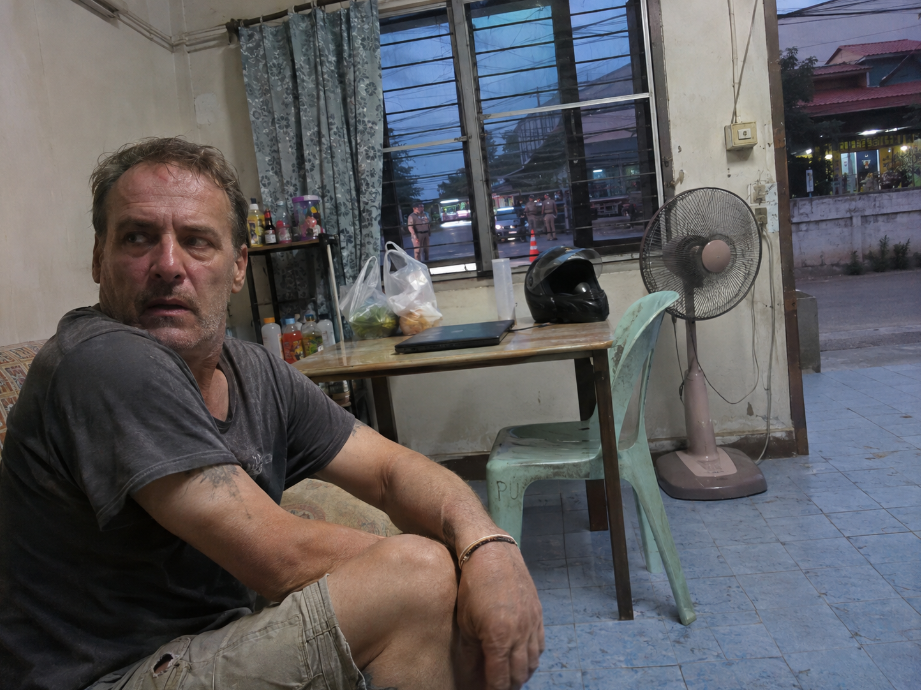
In Pattaya, a man with a three-year overstay ceases to be a human being and becomes a rumor. He cannot walk into a bank to open an account. He cannot sign a legitimate lease in his own name. If he breaks a collarbone on a wet road or wakes up with chest pains at three in the morning, he cannot walk into a proper hospital without handing over identification that triggers an immediate alert. He lives in a cheap, concrete townhouse on the dusty outskirts past the railway tracks—a shadow who pays cash for everything, ducks his head at every police checkpoint, and flinches at the sight of a beige uniform.
For months, he tortured himself with geography, trying to calculate where a ghost is safest.
Part of him wanted to pack a bag and disappear into her family’s rural village four hundred kilometers away, tucked behind endless miles of sugarcane and rice paddies. No tourists, no nightlife patrols, no sirens. Until he remembered the golden rule of rural Thailand: in a small village, a foreign face is a permanent emergency broadcast. Within forty-five minutes of stepping out of a car, every neighbor, shopkeeper, and local village headman knows your name, where you sleep, and whose house you’re living in.
So he stayed on the fringes of Pattaya, clinging to the illusion that a white face blends into the crowd here. Except the city is no longer the blind, analog playground it used to be. Every major intersection, every 7-Eleven entrance, every baht-bus route is wired with high-definition, AI-driven facial recognition cameras quietly scanning the streets twenty-four hours a day. Every time he steps out onto the pavement to buy groceries, he feels like a man walking through a minefield wearing a neon vest.
Worst of all, she doesn’t even know the full, rotting truth of his passport—only vague excuses about “complicated paperwork” and “waiting on a lawyer.” Every lie requires ten more to keep it standing. Last Tuesday, she casually asked him to drive her to the local district office so she could renew her expired Thai national ID card. His stomach dropped straight to the floor. He stood in the kitchen sweating through his t-shirt, inventing a sudden migraine, a client deadline, a dead battery on the scooter—a thousand desperate excuses just to avoid sitting in a plastic chair within a hundred meters of a government camera or a uniformed clerk.
Because to him, getting caught isn’t just a flight home. Deportation means a mandatory blacklist stamp. It means being put on a plane tonight and never seeing her face again.
Six months ago, out of sheer desperation, he sat in the tinted back office of a well-connected visa fixer. The agent flipped through his passport, whistled softly through his teeth at the 2023 entry date, and slid a calculator across the desk. The price to quietly wipe the slate clean and manufacture a legal exit-and-reentry trail was astronomical. With his modest online freelance income, it would take him at least three years of living on boiled eggs and tap water just to scrape that kind of cash together.
And that was the cruelest part of the math: in three years, a three-year overstay becomes a six-year overstay, and the fixer’s price would multiply tenfold. He isn’t saving toward an exit; he is sprinting up an escalator moving downward twice as fast.
So he has surrendered every ounce of leverage he ever owned.
Because he has no bank account, every dollar he earns online routes directly into her Thai banking app. She holds the PIN. The rental contract is in her name. The scooter is registered to her. When she decides they are buying new furniture, sending money to her mother, or eating out at a seafood restaurant he cannot afford, he smiles, nods, and says nothing. He cannot argue. He cannot push back. He cannot even raise his voice during a fight.
He lives completely at her mercy, acutely aware that one bad argument, one moment of pride, or one quiet tip-off from someone looking for a quick reward is all it takes to end the game—putting him in handcuffs in the back of a caged immigration pickup truck, rattling north toward Bangkok in a rolling tin can.
Leave a Reply