Note: This story is based on a reader submission. Names, nationalities, and specific personal details have been altered to protect the privacy of those involved.
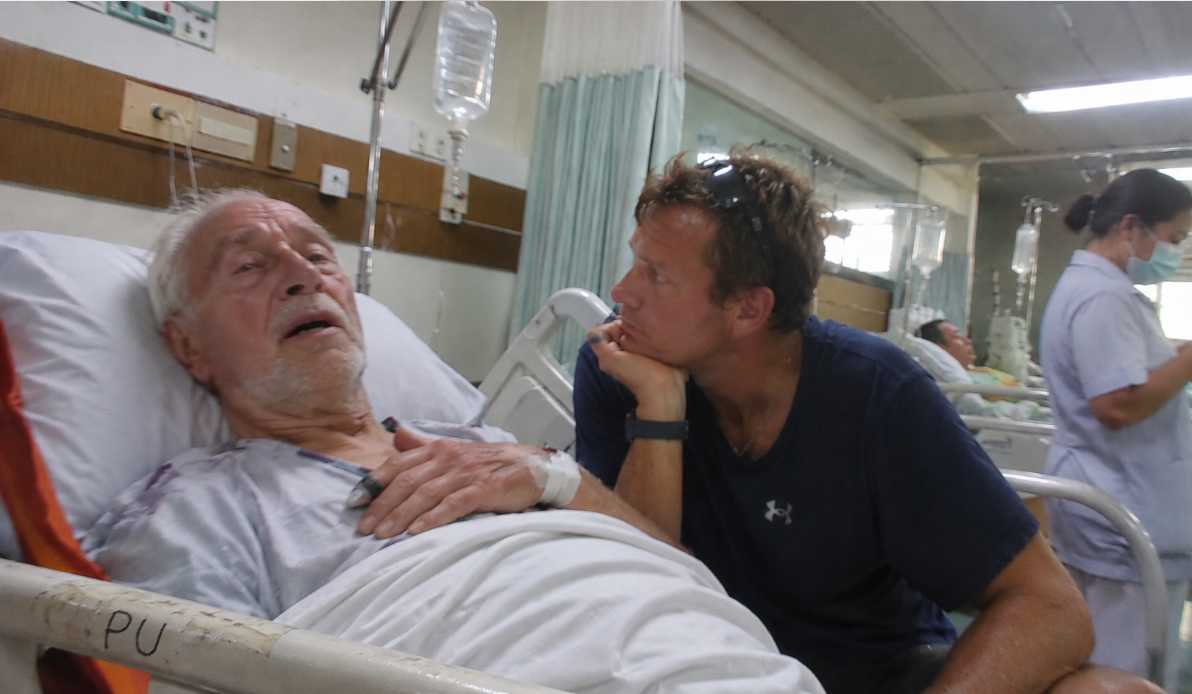
Inside a quiet, fluorescent-lit hospital ward in Pattaya, an elderly Scandinavian man lay dying, looking up at the son who had followed him across the world.
Before he passed, he looked his son in the eye and asked a single question: “Do you really wish this life?”
It was a heavy question coming from a man who had spent decades chasing a tropical fantasy—and even heavier because his son had made the exact same trade. Both the grandfather and the father had walked away from their lives back in Scandinavia to pursue relationships in Pattaya. Between the two of them, they had lived in Thailand for more than forty years.
In all those four decades, neither man learned a single word of Thai.
Whenever anyone back home asked why they had relocated, they delivered the classic expat line: they had come to Thailand “for the culture.” Yet their entire existence remained sealed inside an air-conditioned bubble of familiar bar stools, English-language menus, and the effortless, predictable dopamine of a resort town built to tell lonely foreign men whatever they wanted to hear. They didn’t build a life in Thailand; they simply parked themselves in a waiting room until the clock ran out.
Now, there is a third generation in the country—the grandson, in his early twenties. Only he didn’t go to Pattaya. He settled in Bangkok.
Watching his father and grandfather turn a new country into a slow-motion retirement of cheap thrills left him with a strange, lingering paranoia. Even now, living in a quiet Bangkok condo with his partner—a hardworking woman in her early thirties from Laos—he occasionally catches himself waiting for a hidden catch that isn’t there.
When they met, she was pulling ten- to twelve-hour shifts six days a week in a restaurant for ten thousand baht a month, coming home too exhausted to do anything other than sleep. Instead of playing hero on a neon strip, he made a grounded, pragmatic arrangement: they moved in together, and he agreed to cover her old ten-thousand-baht monthly wage temporarily so she could quit the kitchen and study. The terms were clear from day one—no endless bankrolling, no illusions, just a temporary bridge so she could build real skills and eventually stand on her own feet.
In return, she runs their home, studies, cooks whatever he asks for—learning new recipes off TikTok while he works remotely—and treats the relationship like a genuine partnership. When he visited her family in Laos, expecting rural poverty, he found relatives driving new Mercedes sedans and living in homes larger than the modest Scandinavian apartments he grew up in. Nobody asked him for a dime.
Yet every time he hears stories from two hours down the highway in Pattaya, the old family ghost still whispers in the back of his head—reminding him how easily men confuse transaction with affection, and escape with progress.
Buying a one-way ticket to Southeast Asia doesn’t automatically make a man wiser, freer, or reinvented. If you arrive looking for cheap dopamine, the city will happily sell it to you for forty years straight without ever asking you to grow up. The grass is never greener on the other side of the ocean—it is only greener where you actually put in the work to water it.
Leave a Reply