In our village outside Roi Et, nobody ever says the word Pattaya out loud. They call it “working in a restaurant by the sea” or “managing a shop down South.” Yet on the first of every month, the entire dirt road breathes a little easier because of it.
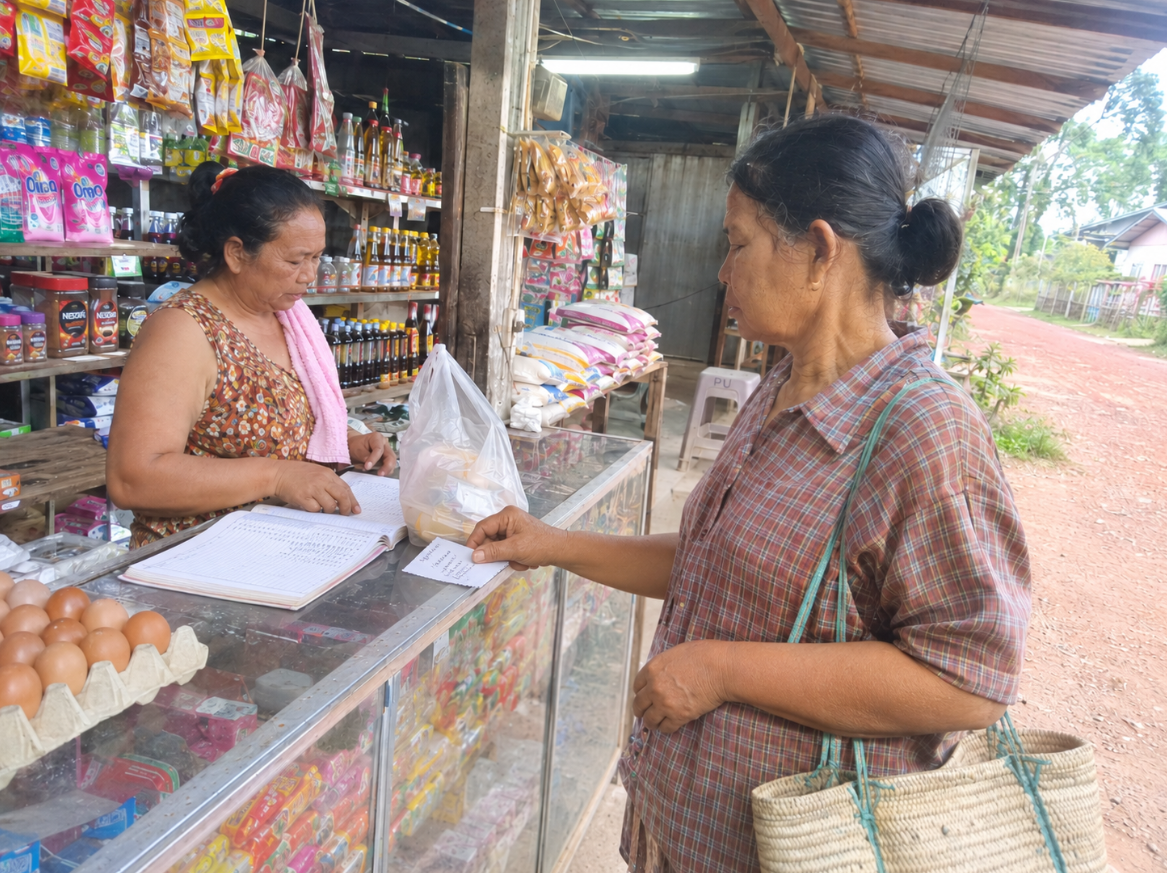
Everyone knows whose daughters are on the coast, and everyone knows when the money lands. You don’t carry cash to Auntie Noi’s corner shop, and you certainly don’t show anyone your phone. You simply take what you need—rice, eggs, fish sauce, laundry detergent—and Auntie Noi writes your name in her grease-stained notebook with a warm smile. Your credit isn’t backed by land or livestock. It is backed by an unspoken address eight hundred kilometers away.
Day 1
The first of the month comes and goes without a sound. The phone sits on the woven mat beside my pillow, silent through the morning heat. At seven, I walk down the red dirt lane to pick up sticky rice and two packets of instant coffee. Auntie Noi doesn’t even look up from her hanging scale; she just nods, bags the rice, and adds a line under my name. Out here, one day means nothing. Networks fail. People get busy. Everyone behaves as if nothing is out of place.
Day 3
Still nothing. Every time I dial her number, the line clicks dead before ringing. By afternoon, the air along our stretch of the road begins to stiffen. Next door, Mae Som—who usually leans over our low concrete wall every evening to gossip about temple merit-making or ask when my daughter is coming home for Songkran—gives a tight, polite nod from her porch and steps inside. In Isaan, neighbors never ask invasive questions. They simply take half a step back to watch if you are about to fall.
Day 5
The walk to the shop feels twice as long in the midday glare. Inside, I reach for a bottle of fish sauce and a small sack of rice. Auntie Noi’s smile stays soft and practiced, though her palm rests flat over the closed notebook on the glass counter. “Better wait until the first, sister,” she says quietly, adjusting a jar of pickled garlic so she doesn’t have to look at me. “Stock is tight this week.” I set the bottle back on the shelf, nod once, and walk home empty-handed, keeping my spine rigid so the eyes behind shuttered wooden windows see nothing out of the ordinary.
Day 7
At four in the afternoon, the village headman slows his motorbike outside my gate, claiming he was checking the drainage pipe along the lane. He sits on a plastic stool under my corrugated tin roof, talking slowly about fertilizer prices and next month’s temple fair. He never mentions my daughter. He never mentions the coast. He doesn’t have to. His eyes move deliberately across the freshly painted concrete addition on my house and the new refrigerator humming in the corner—taking measure of whether the walls are still solid, or if the money from the sea has dried up for good.
Day 9
Just before noon, my phone finally buzzes on the table. The money is there. Ten seconds later, a LINE message pops up from an unfamiliar number: Mom, sorry. Lost my phone last week. Just got a new SIM.
I ride my old scooter out to the ATM by the main highway, withdraw crisp purple banknotes, walk into Auntie Noi’s shop, and lay the cash flat on the glass counter to clear my page in full. Auntie Noi laughs warmly and slips an extra packet of seasoning into my bag. Before dusk, Mae Som is back at the concrete wall, chatting as if the past week had been wiped clean.
On the surface, everything is restored. Yet sitting alone on my new concrete porch that night, listening to the cicadas scream in the dark, I know nothing actually came back. In nine days of silence, the whole village saw what I had spent three years pretending wasn’t true: my dignity, my word, and my place on this street never belonged to me. They were rented from Pattaya.
Leave a Reply