At half past nine on a Tuesday morning, a white Toyota sedan idles outside a four-story apartment block off Soi Buakhao, hazard lights blinking in the heat.
By the curb, a fifty-seven-year-old man with red, swollen ankles shoves a scuffed canvas duffel into the trunk. Before he climbs into the back seat for the ride to Suvarnabhumi, he turns to another tenant smoking a cigarette beside the motorbike rack and delivers his parting speech.
“Get out while you still have a dime left, mate,” he mutters, wiping sweat off his forehead with the back of his hand. “This town chews men up and spits them out. Pattaya ruined my life.”
Two meters away, sitting behind a narrow wooden desk beside three coin-operated washing machines, Phi Nid doesn’t look up from her ledger. She offers the same flat, polite nod she gives every guest who checks out broke, waves once as the sedan pulls toward Third Road, and reaches for the spare key ring.
When she unlocks Room 304, the smell hits the hallway first—stale tobacco, sour laundry, and warm beer.
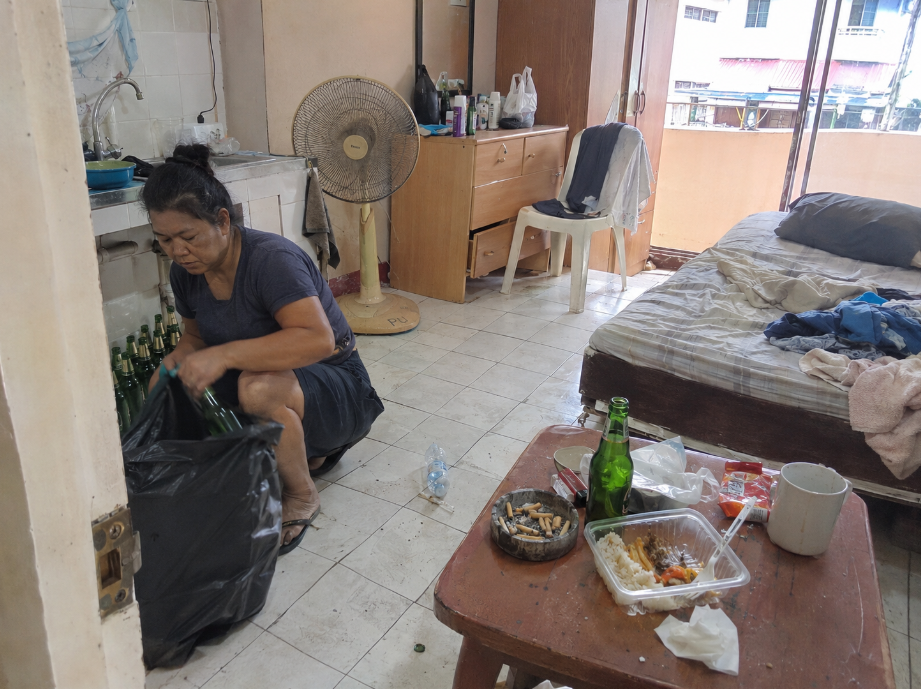
Inside, a dusty standing fan is still rattling on setting three. Nearly forty empty green bottles stand lined up under the kitchen sink. On the laminate dresser sits a plastic ashtray spilling onto crumpled ATM receipts, the bottom lines stamped Insufficient Funds, beside a half-eaten plastic box of basil pork from 7-Eleven that has been sitting out since Saturday.
Phi Nid isn’t even angry. She has run this building for eleven years, and she has heard the “Pattaya destroyed me” speech at least twice a month. She never argues with them—telling a paying customer the truth is bad for business.
Instead, once the door clicks shut, locals use one blunt Thai phrase behind the counter: พังมาจากบ้านแล้ว. He was already broken before he got on the plane.
Phi Nid remembers the evening fourteen months ago when the man from 304 first walked into her lobby. His hands were already shaking so hard he smudged the blue ballpoint ink while signing his passport copy for the TM30 registration. Before he asked for the Wi-Fi password, he asked which corner shophouse sold beer after midnight.
He didn’t step off a long-haul flight as a disciplined, clear-headed man who got ambushed by a wicked resort town. Back home, he was already pouring whiskey alone in a cold kitchen on weeknights after his divorce. He was already terrible with money, already starved for someone twenty years younger to laugh at his jokes, already running out of people willing to listen to him talk.
Back in Europe or Australia, three boring walls kept him standing upright: expensive pints, bad weather, and the quiet shame of his neighbors watching him unravel. You can’t sit outside a pub at eleven in the morning in a stained vest when it is four degrees and drizzling, and you can’t drink until dawn when a round costs forty euros.
Thailand didn’t invent his habits. It just took the brakes off.
Here, the sidewalk is warm enough to drink before lunch. Nobody knows his last name, nobody asks why his grown kids stopped returning his calls, and for a couple thousand baht a night, there is always a plastic stool and a bar girl willing to tell him he still looks forty. For a man with no internal guardrails, that freedom feels like heaven for the first six months—and like a local conspiracy the morning his pension runs dry.
That is the quiet irritation locals almost never voice out loud.
Over at Banglamung Hospital, a Thai nurse stitches the forehead of a sixty-year-old who rode a rented Honda Click drunk at three in the morning in flip-flops, listening in silence while he curses “crazy Thai roads.” Down the lane, a woman pushing a noodle cart watches a guy burn five thousand baht on drinks in a beer bar, then snap at her over a sixty-baht bowl of soup, grumbling about how “this country bleeds foreigners dry.”
Meanwhile, hundreds of thousands of Thai people live in the exact same city, walk past the exact same bars on their way to work, buy groceries at the exact same shops, and somehow manage not to drink themselves into an ambulance or wire their savings to a stranger they met last Thursday.
In Room 304, Phi Nid unplugs the rattling fan, shakes open a black trash bag, and starts dropping bottles inside one by one. Somewhere along the motorway to the airport, the former tenant is already typing out a bitter warning online about how Pattaya destroys good men.
She slides the balcony door open to let the smoke clear out. The city didn’t break him. It just handed him a warm room to finish what he started ten years ago—and listened politely while he blamed the address on his way out.
Leave a Reply