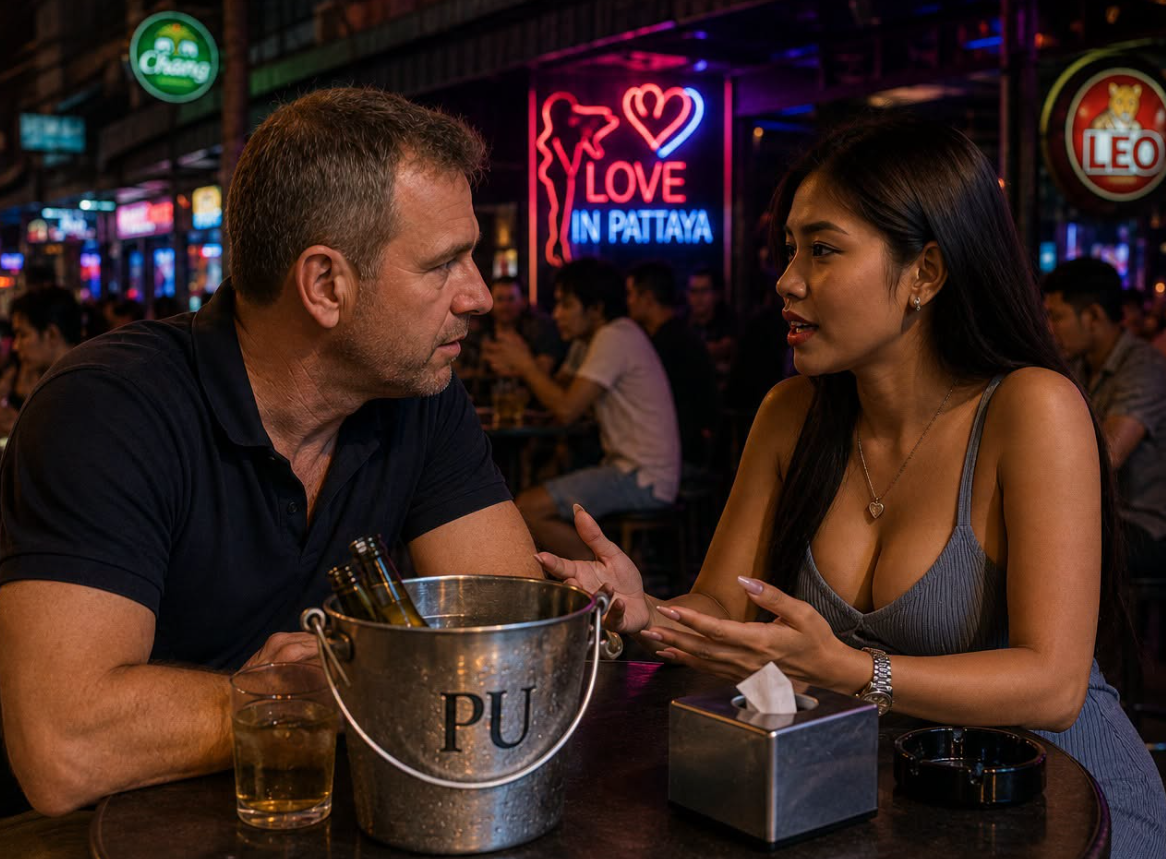
You sit at a bar, buy a few drinks, and within a week, you’re hearing “I love you.” You feel like a king. You think you’ve finally found the pure, unconditional, romantic love that Western society always promised you.
But six months later, you’re paying the condo rent, a motorbike installment, and sending 15,000 baht a month to a village in Isan because a roof needs fixing or a buffalo got sick. You feel scammed. You tell your buddies at the sports bar: “She never loved me; she just loved my ATM card.”
The brutal truth – You are both using the word “Love,” but you are reading from two entirely different dictionaries.
Here is the fundamental clash between the Western concept of romance and the Thai reality of Duty and Nam Jai.
The Western Illusion: Love is a Feeling
In the West, we are raised on Disney, Hollywood, and the concept of individualism. Love is an emotion. It’s butterflies in your stomach. It’s two people against the world. In this model, money is considered “dirty.” Mixing financial dependence with love makes the relationship “transactional” and therefore fake. We fundamentally believe that if a woman truly loves you, she will stay with you even if you lose everything and have to live in a cardboard box.
The Thai Reality: Love is an Action (and a Transaction)
In Thailand—and especially in the working-class environments that feed the Pattaya ecosystem—love is not just a feeling. Love is a verb. Love is survival. It is demonstrated through tangible support, care, and financial security.
To understand why your girlfriend is asking for money, you need to understand two foundational pillars of Thai culture:
1. Nam Jai (น้ำใจ) – The Water of the Heart
Directly translated, Nam Jai means “water of the heart.” It represents the spirit of generosity, kindness, and sharing without expectation of direct return. However, in a relationship dynamic, a man showing Nam Jai means he is a capable provider. He shares his resources. If you have money but refuse to help her out when she’s short on rent, to her, you have absolutely no Nam Jai. And a man with no Nam Jai is a man who does not care for her. In her eyes, you are the one faking the relationship.
2. Bunkhun (บุญคุณ) – The Debt of Gratitude
This is the ultimate duty. A Thai child owes an unpayable debt of gratitude to their parents for giving them life and raising them. Repaying this Bunkhun usually means providing financial support once the child starts working. When you enter a serious relationship with a Thai woman, you don’t just date her; you marry her Bunkhun. Her duty becomes your duty. If you tell her, “I love you, but I’m not paying for your mother’s hospital bill,” you are essentially asking her to betray her core cultural identity.
The Inevitable Collision
When a Westerner expects unconditional love without financial obligation, he looks cheap, selfish, and uncommitted to his Thai partner.
When a Thai partner expects financial sponsorship as proof of love, she looks like a manipulative gold-digger to the Westerner.
In Pattaya, ignorance of this dynamic is the number one reason relationships end in bitter resentment and empty bank accounts. You probably aren’t being actively scammed; you just didn’t read the cultural terms and conditions.
Leave a Reply