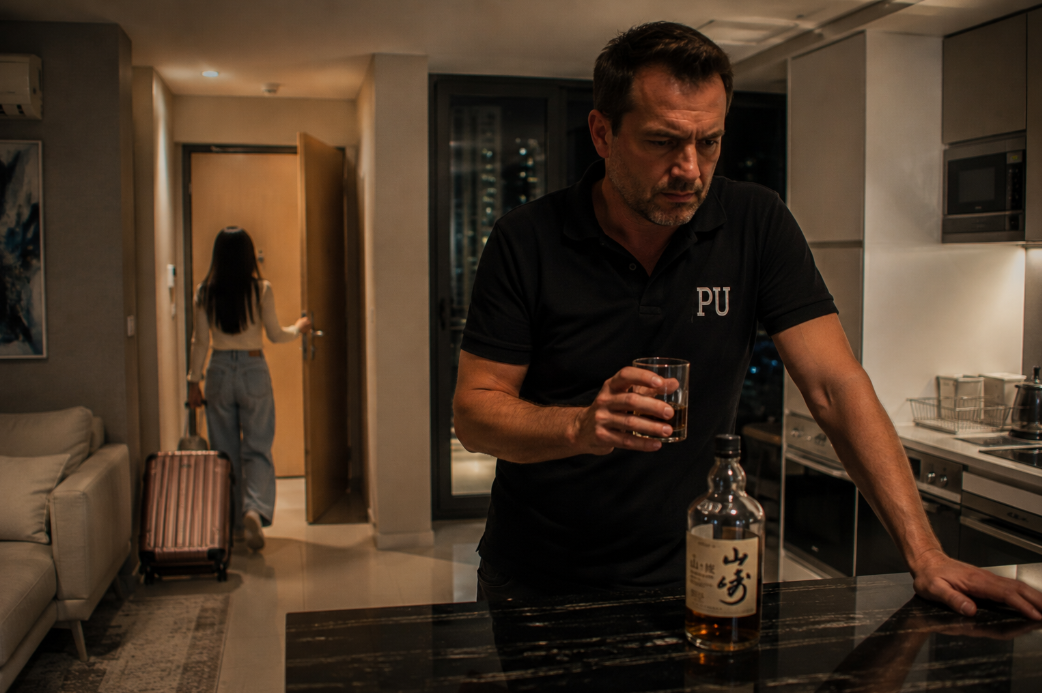
Julian slammed the heavy door of his Wongamat condo and engaged the deadbolt. The metallic click echoed through the empty hallway. He walked over to the kitchen island, poured himself a neat measure of Japanese whiskey, and exhaled with a profound, intoxicating sense of triumph.
He had finally done it. He had kicked Mint out.
The last three weeks had been absolute hell. Julian felt like a strong, self-respecting modern man who had successfully identified a toxic dynamic and enforced his boundaries. He had delivered a stern lecture about how he would no longer tolerate her constant lateness, her sudden mysterious migraines, and her absolutely absurd request for 30,000 baht to bail her cousin’s boyfriend out of a gambling debt.
When he finally tossed her rose-gold suitcase toward the door and shouted, “I’m done, get out!” Mint didn’t scream. She just cried softly, methodically packed her skincare routine, whispered,
“You have a very cold heart, Julian,” and walked out into the humid night.
Julian was absolutely certain he was the initiator, the victor, and the author of the finale.
He had no idea that he had just played the lead role in a flawlessly directed psychological thriller—a script Mint had written a full month ago.
In Western culture, a breakup is an act of direct confrontation. You sit down across a table, look the person in the eye, and say, “We need to talk. It’s not you, it’s me.” It is painful, but it provides closure.
In the Thai ecosystem, direct confrontation is a catastrophe. Looking someone in the eye and saying “I am leaving you” guarantees a massive conflict, aggressive energy, and a devastating loss of face. The culture dictates harmony (jai yen) at all costs.
So, when Mint realized she was bored, or when a more promising option appeared on the horizon, she didn’t pack her bags. Instead, she initiated the “Passive Eviction Strategy.”
It is a masterpiece of emotional aikido. The goal is simple: create an environment so consistently uncomfortable that the foreigner explodes and kicks her out himself.
It started with micro-dosing discomfort. Intimacy vanished, replaced by sudden, crippling headaches that only seemed to occur between 8:00 PM and midnight.
Then came “Ghost Mode.” When Julian tried to talk about his day, she would stare blankly at her phone, scrolling through Thai TikTok at maximum volume, offering only one-syllable replies. She conveniently “forgot” to turn off the air conditioning. She left wet towels on his imported suede sofa.
The final move was the Financial Absurdity. Mint knew Julian despised feeling like an ATM. So, she deliberately asked for a sum of money she knew he would definitively refuse, for a reason that was guaranteed to make his blood boil.
And Julian snapped. He yelled. He packed her suitcase.
To the expat, it felt like an empowering act of rebellion.
To Mint, it was the perfect crime.
She achieved her exit without breaking a single sweat. She bypassed all the guilt. Right now, she is sitting in a hotpot restaurant with her girlfriends, wiping away a theatrical tear and saying,
“He is so jai rawn (hot-headed). He just threw me out! I tried so hard, but he is a tyrant.”
Her karma remains crystal clear. She gets to play the tragic victim of a cruel foreigner. Meanwhile, Julian sits in his silent condo, sipping his whiskey, genuinely believing he is the one in control.
In Pattaya, the greatest delusion an expat can have is thinking that because he slammed the door, he made the decision. Most of the time, he was just elegantly manipulated into doing the dirty work.
Leave a Reply