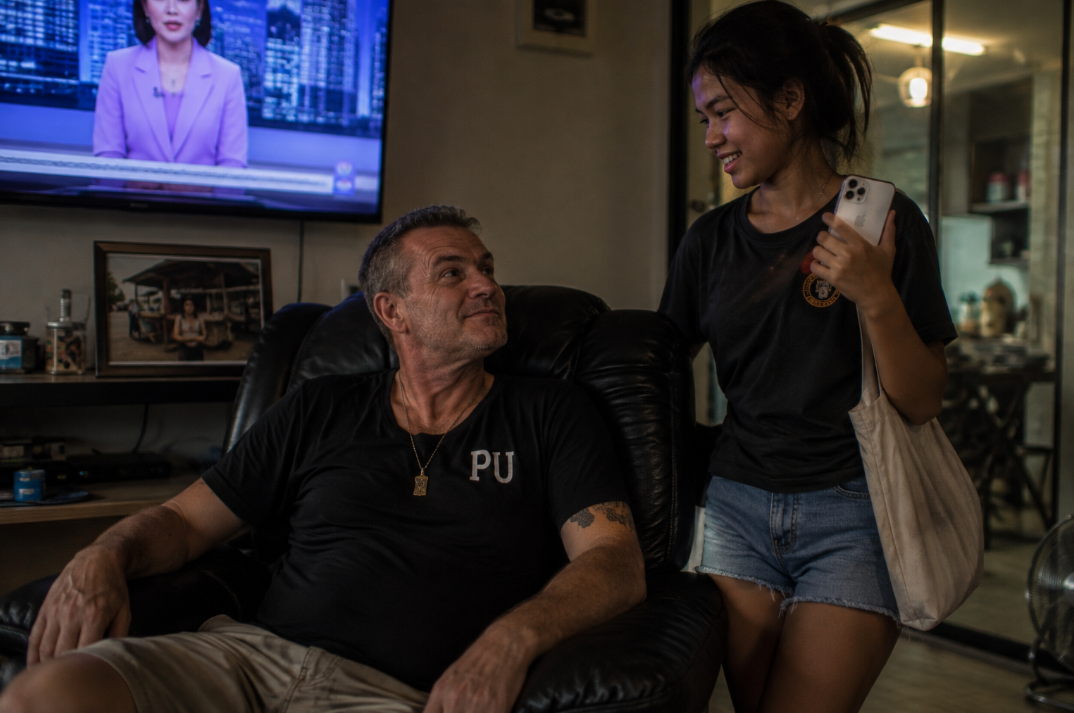
Dan sat deep in his leather armchair, the massive flat-screen TV casting a flickering, sterile blue light across the living room. The local Thai news anchor was muttering something about traffic on Sukhumvit Road, but Dan wasn’t listening. His eyes were locked on a small, faded photograph framed in cheap plastic, sitting quietly on the shelf just below the screen.
The picture was dull, sun-bleached, and curled at the edges. But to Dan, it was the heaviest thing in the room.
It all started sixteen years ago. Back when the dollar was an iron shield, the girls were hungrier, and Pattaya was still that raw, unfiltered frontier everyone now pretends they miss.
He was a classic cliché: he walked into a Walking Street go-go, drowned in the smell of stale cigarette smoke, spilled draft beer, and cheap vanilla perfume, and locked eyes with her. He barfined her that night. Then two days later. Then a week later. Before the month was over, her suitcase was sitting in the corner of his condo.
He heard the whispers. He sat at the expat bars and listened to the bitter veterans swear that she was just another predator, that the meter was running, that he was a fool. Dan just nodded into his pint, secretly nursing the ultimate, arrogant expat illusion: I can change her.
Then the money ran out.
The arguments started. Brutal, screaming matches that rattled the condo windows. In the fishing village, a dry wallet usually means an empty bed. But instead of packing her bags for a new sponsor, she did something that shattered his worldview. She would walk out the door in the morning and return hours later smelling of damp earth and salt. She carried plastic bags filled with wild basil and morning glory she had foraged from the overgrown roadsides, and a heavy bucket of clams she had dug out of the Naklua mud flats during low tide.
She cooked. They ate. She stayed.
A year later, their daughter was born. But the gravity of the ecosystem eventually pulled them back into the dirt. Like every foreigner before him, Dan hit a wall of resentment over the “Family Tax.” He didn’t understand why she was still bleeding money to the village up north.
The breaking point arrived on a suffocating, humid Tuesday. She stood in the kitchen and delivered an ultimatum: the village needed money, and if he wouldn’t help, she had to go back to work.
Dan exploded. He screamed that she was just like the rest of them. She didn’t yell back. She simply turned around, walked out the door, and left the crying infant in his arms.
When Dan walked down to the local bar that night, looking like a ghost, the veterans just raised their glasses. “Told you, mate. She’s already back on the poles.”
For three days, the condo smelled of sour milk, sweat, and absolute defeat. Dan waited for the phone call demanding a ransom.
But she hadn’t gone to Walking Street. She had taken a brutal, 12-hour third-class bus ride to Isan to face her family. Dan still doesn’t know exactly what was said in that village. But on the third evening, the door unlocked. She stood there, smelling of diesel exhaust and provincial dust, looked at him with dead-calm eyes, and said:
“Fine. Then we fight together.”
They packed up and abandoned the coastal illusion, moving across the highway to the “Darkside”—East Pattaya. They rented a decaying, concrete townhouse with a rusted gate. To save money, she scavenged some old wood and built a laughable, lopsided little stand in front of their house. With a baby strapped to her chest in a worn-out sling, she started selling 25-baht Thai iced tea to passing motorbike taxis.
That was the moment captured in the faded photograph under the TV.
Dan cut off his expat friends. He couldn’t stomach another conversation that started with, “Has she left you yet?” He needed to prove to himself, and to the neon machine, that the system could be beaten. He locked himself in that sweltering house and built a small online export business.
It was agonizing. There were visa scares, health collapses, and weeks where they ate plain rice. It was the grey, unglamorous, bone-crushing grind of real life. But they were grinding the gears together.
Suddenly, a hand tapped his shoulder. Dan flinched, snapping out of the memory.
His fourteen-year-old daughter stood there, smelling of expensive mall perfume, laughing loudly at his startled face.
“Pho!” she giggled, holding up a brand-new iPhone. “I’m taking a Bolt to Terminal 21 with my friends. I tried calling Mom, but she never answers her phone when it’s busy at the cafe.”
She paused, following his gaze to the shelf. She looked at the lopsided tea stall in the faded picture, then down at him.
“Pho… how did you and Mom actually meet?”
Dan leaned back in his leather chair, listening to the muffled sounds of his wife’s thriving bakery out front. He looked at his beautiful, privileged teenager who would never have to dig for clams in the Naklua mud. A slow, knowing smile spread across his face.
“Well,” Dan said, his voice soft. “It all started at the beach…”
Leave a Reply