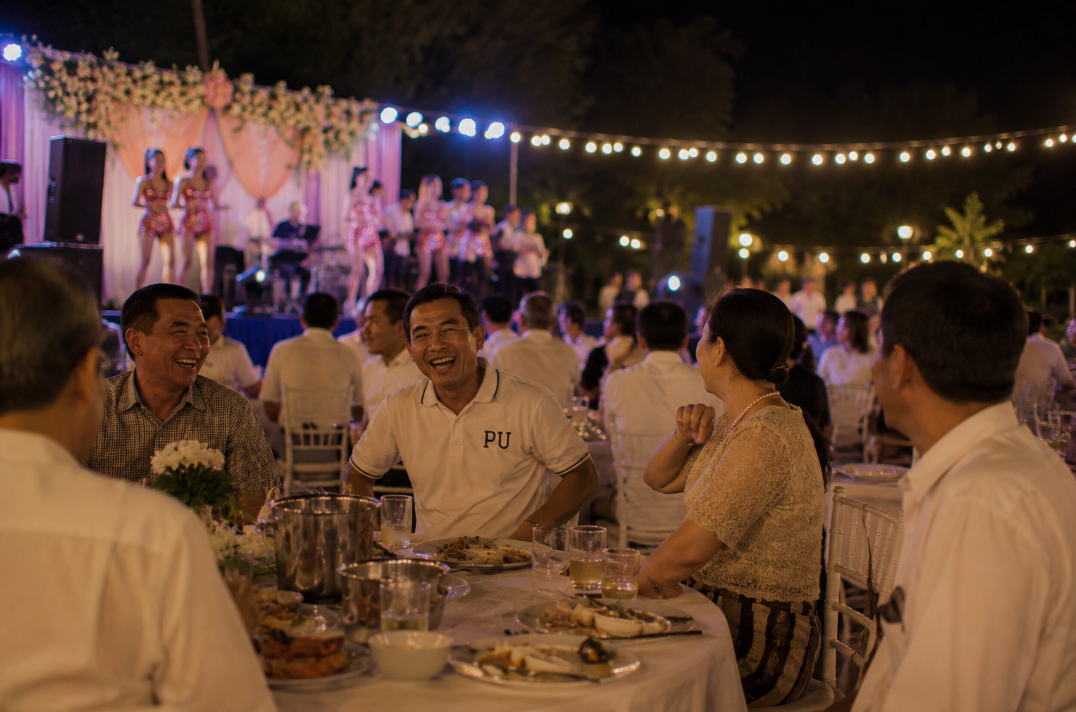
Weddings in Thailand are a masterclass in duality. In the morning, it is all golden silk, pressed shirts, and the solemn chanting of Buddhist monks. But when the sun goes down, the cultural matrix completely rewrites itself.
Last weekend, I was at a high-society wedding in Rayong. The groom, a young guy from a seriously wealthy local family, had planned the event down to the last detail. Months in advance, when finalizing the massive budget, he had one non-negotiable requirement for the after-party. He didn’t care much about the floral arrangements or the color of the napkins, but he made absolutely sure they booked the best Coyote crew in the province.
By 10:00 PM, the transformation was complete, and it was a cinematic masterpiece of rural Thai chaos.
As the elegant performers singing traditional, conservative Luk Thung folk songs wrapped up their dinner set, a completely different crew took over the venue. The pre-booked Coyote dancers stepped out from behind a fleet of modified Isuzu D-Max pickups, laced up in spandex shorts, sequined tops, and towering platform boots, ready to hijack the night.
They climbed onto the tailgates of the trucks, which were outfitted with wall-to-wall subwoofers. The heavy bass of Thai EDM thumped so hard it vibrated the ice inside the plastic cups of Blend 285 whiskey. Down in the dust, a group of local village kids, no older than seven, were breakdancing wildly to the beat.
But the absolute peak of the night was watching the tipsy, 50-year-old Thai uncles. Emboldened by the whiskey, they would shuffle up to the trucks, trying to smoothly flirt with the dancers towering above them—only to receive a lightning-fast, open-handed smack to the back of the head from their furious, eagle-eyed wives. The entire table would erupt in laughter.
To the untrained Western eye, the word “Coyote” (borrowed from the movie Coyote Ugly) instantly translates to the red-light district. But in the Thai provinces, it is an entirely different ecosystem.
The Boundary of the Dance
Here, being a Coyote is a legitimate, highly sought-after entertainment profession. It is not a bar hustle. There is a strict, iron-clad boundary: they are a separate entertainment crew hired in advance to dance, hype the crowd, and entertain. Not to go home with the guests.
You don’t just see them at nightclubs. They are the standard entertainment package for factory anniversaries, the grand opening of local hardware stores, massive car shows, and, of course, weddings. It is seen by many locals as just another freelance gig for young women to pay their university tuition or support their families.
A National Phenomenon
This specific brand of entertainment is so deeply embedded in the cultural fabric that it has actually triggered national crises.
Back in 2006, the Coyote craze was so normalized that dancers were literally brought in to perform on top of military tanks to entertain soldiers after a coup. But the breaking point came when a troupe of Coyotes was hired to dance at a Buddhist temple in Nong Khai during a sacred religious holiday.
The backlash was monumental. Queen Sirikit herself reportedly expressed deep dismay at the cultural clash. The Ministry of Culture panicked and launched a fierce nationwide campaign to banish the dancers from temples and public parks. One frustrated Cultural Center director famously snapped to the press, declaring that Coyote girls needed to be restricted to nightclubs, stating:
“They must be in their proper place, just as an animal should be in a zoo.”
But out here in Rayong, far from the Ministry’s watchful eyes, there was no controversy. There was only the heavy smell of grilled pork, the pulsing neon lights of the subwoofer walls, the laughter of kids in the dirt, and a groom celebrating the best day of his life.
It is the ultimate, unfiltered Thai juxtaposition: making merit with monks in the morning, and watching neon-lit Coyotes dance on pickup trucks by night.
Leave a Reply