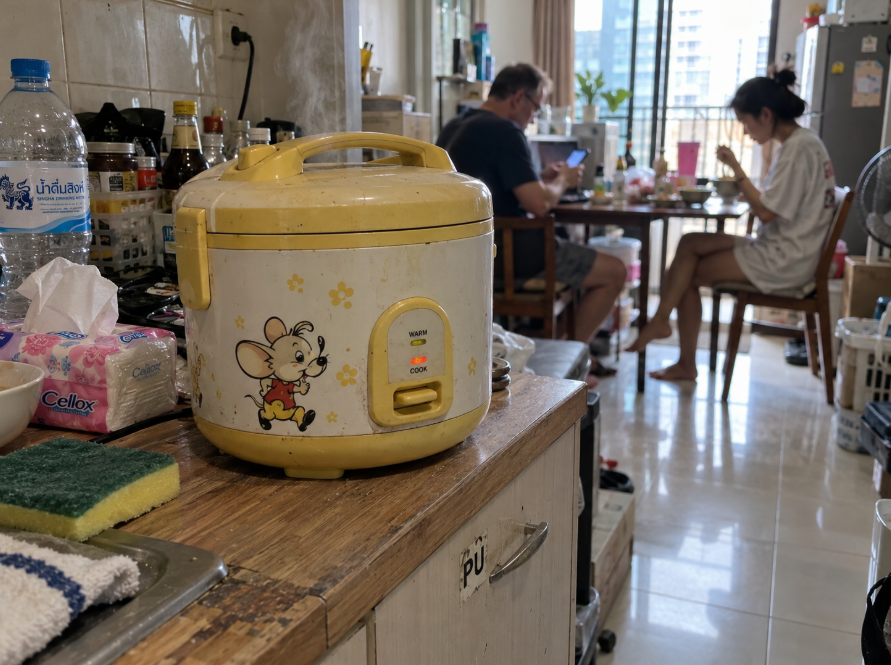
At what exact moment does a cheap Mickey Mouse rice cooker transform into a holy matrimony? Where exactly is the line between being a sponsor in Pattaya and a husband in Texas?
Every time we dissect the mechanics of a monthly allowance, the comment section fractures. Some men laugh, but a very specific demographic gets deeply, defensively uncomfortable. They desperately need a moral boundary. They need to believe that what happens in a rented condo in Jomtien is a cynical, cold transaction, while what happens in a four-bedroom suburban house back home is pure, uncorrupted romance.
The brutal, historical truth is that there is no line. The line is a marketing invention.
Let’s look at the actual mechanics of a traditional Western marriage. You stand in a room and sign a legally binding financial contract. You merge your credit scores. You agree to split your future assets. You buy a diamond—a rock with an artificially inflated market value, popularized by a 20th-century corporate ad campaign—specifically to demonstrate your financial solvency to her family and society.
If the romance fades and the contract dissolves, the legal system steps in. You are mandated to surrender half of everything you own, and you are locked into paying a rigid monthly allowance to your former partner for years.
How exactly is this mathematically different from the Pattaya grid?
Historically, across almost every civilization, marriage has never been about soulmates. It has always been an economic exchange: the consolidation of male resources in return for a family, future, and domestic stability. The West simply spent the last century running a brilliant, multi-billion-dollar PR campaign to convince you that this financial contract is actually about your soul. Pattaya didn’t invent the transaction. Pattaya just stripped away the PR campaign.
Let’s look at the everyday reality. The domestic routine is exactly the same in both ecosystems. The man in Texas and the man in Thailand both wake up to the same mechanics of life. The shared morning coffee drank in silence, the endless piles of folded laundry, the quiet arguments over grocery bills, the rice cooker steaming on the counter while the TV plays in the background.
A sponsored girl in an Isan village and a wife in a Melbourne suburb are both navigating the exact same domestic economics. They both know how to manage a man’s moods, how to stretch a household budget, and how to maintain the comfort of a home. And paradoxically, real, genuine affection can exist in both arrangements. Both men are paying for stability. Both men are paying for companionship. Both men are terrified of growing old alone.
The difference isn’t the presence or absence of love. The difference is transparency.
The girl in Thailand gives you the terms upfront. She doesn’t demand half your pension, she doesn’t require a permanent legal contract, and she doesn’t pretend the financial foundation of the relationship doesn’t exist.
So, when does a sponsor become a husband?
The moment a man decides his ego needs a formal institution to mask the transaction. A sponsor pays the woman directly. A husband pays the mortgage, the diamond industry, and the divorce lawyers, just for the privilege of pretending he didn’t pay for the relationship at all
Leave a Reply