She is sitting in seat 34J on a twelve-hour flight to Frankfurt. It is her first time leaving Asia. The expat sitting next to her is holding her hand, rubbing her knuckles with his thumb. He sees her gripping the armrest and smiles, assuming she is just nervous about the takeoff.
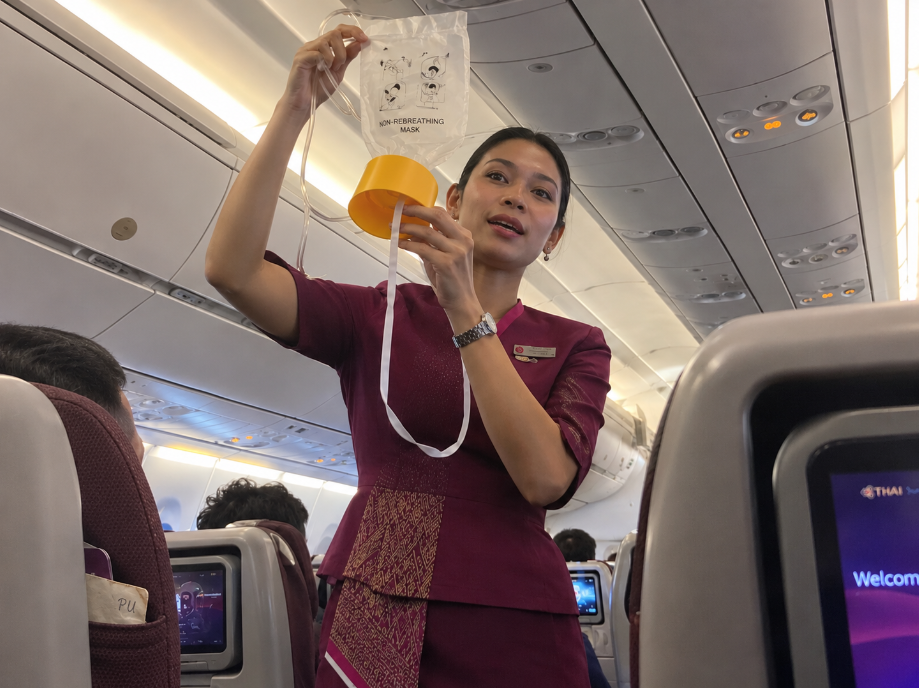
In the aisle, a flight attendant is holding up a yellow plastic cup attached to a clear tube. The automated voice over the intercom is crisp and universal.
“In the event of a loss of cabin pressure, oxygen masks will drop from the panel above you… Please ensure your own mask is fitted before assisting others.”
She stares at the flight attendant. She looks at the yellow plastic. Put your own mask on first. She tries to visualize the instruction, but the concept simply does not process. It goes against every survival instinct she has ever been taught.
Suddenly, the low roar of the jet engines turns into a deafening white noise. The cabin pressure shifts, and the European man beside her dissolves completely into the background.
She is no longer sitting next to a sponsor. The economy seats around her are suddenly filled with the heavy, inescapable gravity of her village. Her mother is sitting in the window seat, rubbing her bad knees. Her aunt is sitting directly behind her. Her seven-year-old daughter is in the middle seat, swinging her legs. Next to her is the teenage nephew whose tuition she pays every semester, and across the aisle is her grandmother, clutching a faded Buddhist amulet.
The yellow masks drop from the ceiling, swinging wildly on their plastic tubes.
Her mind immediately runs the brutal, frantic arithmetic of the grid. Who gets the air first?
She reaches for the first mask. It goes to her mother. That isn’t even a choice; it is a biological debt. The mother who mortgaged the rice fields, who broke her back so the family could eat. The second mask goes to her daughter. Her own blood. The only reason she walked into a neon-lit bar on Soi 6 in the first place. The third mask has to go to the nephew. If he doesn’t finish technical college, the family has no future earner, and the poverty cycle repeats. She reaches for the fourth mask and pulls it toward her aunt, because her aunt is the one who watches the daughter while she is sending money from a rented room in Chonburi.
The white noise is roaring in her ears. She is suffocating, passing the oxygen in every direction, calculating the exact value of every breath her family takes. In the violent panic of the simulation, looking at all these people she is contractually obligated to keep alive, it never even occurs to her to pull a mask toward her own face.
The idea of saving herself while they are gasping for air is culturally and financially impossible. She is the provider. She doesn’t get to breathe until they are all breathing.
Click.
The sharp sound of metal snapping together breaks the vacuum. The white noise evaporates instantly.
A flight attendant is leaning over her, politely adjusting the slack on her lap belt. The European man next to her squeezes her hand.
“You okay?” he asks gently. “You spaced out for a second.”
She looks at the blank plastic panel above her head. She takes a slow, shallow breath of the filtered cabin air, nods, and smiles.
She doesn’t explain what she just saw. Because how do you explain to someone else that you have spent your entire life living without oxygen?
Leave a Reply