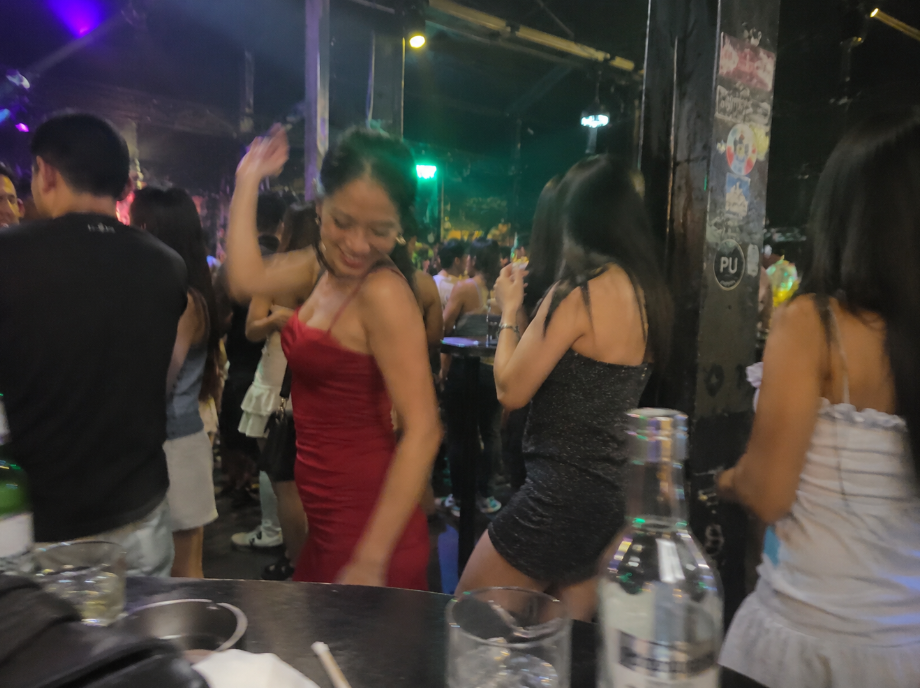
He is thirty-six. He is leaning against a high table at Republic, watching his Thai girlfriend dance to the heavy bass drops. He is incredibly proud of himself.
He looks at the older expats on the grid, the ones constantly stressed out, paying for a new roof in Buriram, arguing on LINE video calls, drowning in the heavy, suffocating drama of provincial family debt. He pities them. He didn’t fall into the classic trap. He doesn’t pay for sick water buffaloes. He takes his girl to beach clubs, buys premium bottles, and keeps everything light, breezy, and strictly in the present tense. He believes he has successfully hacked the Pattaya dating scene. He is the cool, drama-free boyfriend.
What he doesn’t know is that three hours earlier, while getting her makeup done in her condo, her friend asked about him. She shrugged, applied her lip gloss, and gave him the ultimate, terminal classification of the Thai dating market: “Khao pen khon rak sanook.”
He is a Rak Sanook guy.
Literally translated, Rak Sanook (รักสนุก) means “loves fun.” To a Western man, this sounds like a glowing endorsement. He thinks it means he is vibrant, energetic, and a joy to be around. But in the Thai socio-economic dictionary, it is a polite, lethal disqualification.
It is a cultural trope as old as the Thai entertainment industry itself. Turn on any local radio station, listen to any high-pitched, heart-wrenching Luk Thung ballad playing from a som tum cart, and you will hear a song about a Rak Sanook man. He is the charming, smiling ghost. He is the man whose heart is a playground, who wants the heat of the night but completely evaporates when the sun comes up and the real bills arrive. He is a tourist in other people’s lives.
When a girl on the grid labels a man Rak Sanook, she is filing him into a very specific psychological folder. It is a strictly short-term asset class.
On the grid, women categorize men instantly. There is the Provider. The Provider gets the tears, the heavy emotional manipulation, the brutal interrogations, and the demands for absolute loyalty (Rak diao, jai diao). He gets the drama because he represents a long-term exit strategy. The drama is a stress-test of his financial endurance.
And then there is the Rak Sanook guy.
The expat at the club thinks he is winning because she never cries to him about her mother’s hospital bills. She never aggressively checks his phone. She never starts a war if he looks at another waitress. She just smiles, takes selfies, and drinks his vodka. He thinks he has achieved a perfect, frictionless relationship.
What he fundamentally fails to understand is that her lack of jealousy is not a sign of a healthy modern relationship. The absence of drama is actually an absence of perceived value.
She doesn’t check his phone because she does not care what he does. She doesn’t ask him for the village mortgage because she knows he would run away, and she doesn’t want to ruin a free VIP table at Republic. Because she expects absolutely zero long-term security from him tomorrow, she extracts maximum experiential value from him tonight.
Is it good or bad to be the Rak Sanook guy? That depends on your delusion.
If you just want a holiday, it’s a brilliant arrangement. But if you think she actually loves you because she is always smiling, you are walking blindfolded into a wall. You haven’t outsmarted the matrix; you have just been completely disqualified from it.
He stands there sipping his drink, thinking he is the smartest guy in the city. But the exact second a boring, uncool, stressed-out Provider walks into her peripheral vision—a man willing to actually lift the heavy concrete blocks of her family’s poverty—the Rak Sanook guy will be left standing alone in the club, holding a bucket of melting ice.
Leave a Reply