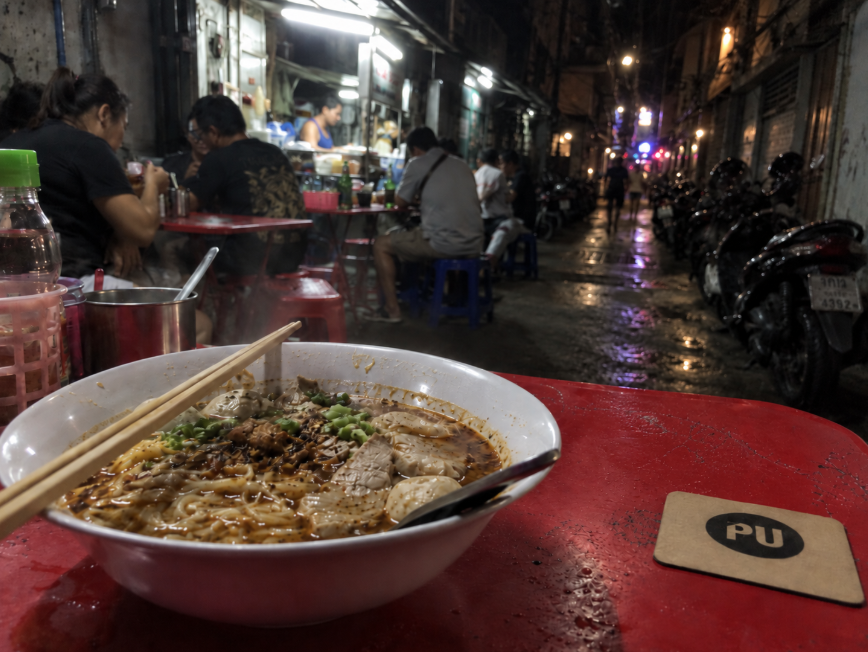
Everyone knows the tragedy of a perfect noodle shop in Thailand. You find a quiet, plastic-chair spot down a dark alley. The broth is rich, the pork falls off the bone, the auntie knows your exact order without you having to speak. It’s your sanctuary.
Then, a random TikToker or a clueless YouTuber discovers it. They post a glowing video. By next Tuesday, there is a 50-meter line of sweating tourists and expats blocking the sidewalk, holding up their iPhones. The wait time jumps from two minutes to an hour. The prices creep up. The sanctuary is dead.
You can’t ask a business owner to reject paying customers. But Thai internet culture is adaptive, and it has recently developed a brilliant, cynical defense mechanism against the viral tourist horde.
It is the “2 out of 10” protocol. Digital gatekeeping at its absolute finest.
Here is how the mechanics work. When a beloved local spot gets exposed, the regulars don’t complain in the comments of the viral video. Instead, they coordinate a silent strike on the algorithms. Suddenly, the restaurant’s profiles on Grab, LINE MAN, and Google Maps are flooded with a wave of highly specific, yet remarkably mundane negative feedback.
“The soup was slightly too hot. 2/10.”
“The waitress didn’t smile enough when she handed me the water. 2/10.”
“Too much pork. 2/10.”
You can spend years trying to play the system straight. You write honest, detailed paragraphs, carefully upload photos, and climb the ranks to become a Level 7 Local Guide, genuinely believing you are helping the community by highlighting good venues. You think a 5-star rating is a reward. But the true veterans have realized that in this ecosystem, a glowing 5-star review is actually a death sentence.
To a passing tourist checking their phone for lunch, a sudden drop to a 2.4-star average is a massive red flag. They keep walking, looking for a safe, sanitized franchise with a 4.8 rating.
But to the initiated, a sudden flurry of “2 out of 10” reviews is a flashing neon sign. It is a secret code among the locals that means: This place is absolutely phenomenal, the food is top-tier, and we are actively building a digital fence to keep the outsiders away.
The beauty of the Thai internet is that successful tactics never stay confined to one industry. The 2/10 protocol has recently mutated, migrating away from noodle bowls and directly into the darker, specialized corners of the web.
It has hit the freelancer boards, the adult service directories, and the underground LINE groups.
An expat is scrolling through a specialized review site looking for a girl. He clicks on a profile. The pictures are great, but the recent reviews are brutal. “Very quiet. Doesn’t speak much English. Didn’t want to go drinking on Walking Street. 2/10.”
The average tourist reads that, assumes she is boring, and immediately clicks away to find a 5-star girl who performs the standard, high-energy bar-girl script.
But the veteran reads that same 2/10 review and immediately asks for her contact number. Because he speaks the code. He knows that “very quiet” means she isn’t screaming fake compliments at him. He knows “doesn’t speak English” means she isn’t secretly managing three foreign sponsors on WhatsApp while sitting on his lap.
Those 2/10 reviews on her profile weren’t written by angry customers. They were written by men who found an absolute jackpot and are deliberately tanking her public rating so she doesn’t get fully booked by clueless tourists and raise her rates.
In a city where absolutely everything is for sale and every experience is aggressively over-marketed, the only way to protect something genuine is to systematically convince the rest of the world that it’s absolute garbage.
Leave a Reply