To a tourist walking down Soi 6, luck is an abstract concept. Maybe it means finding a 500-baht note on the pavement or narrowly avoiding a speeding baht bus. But in the cramped, fluorescent-lit makeup rooms behind the bars, luck is a highly specific, measurable economic category. The women working the grid call it duang (ดวง).
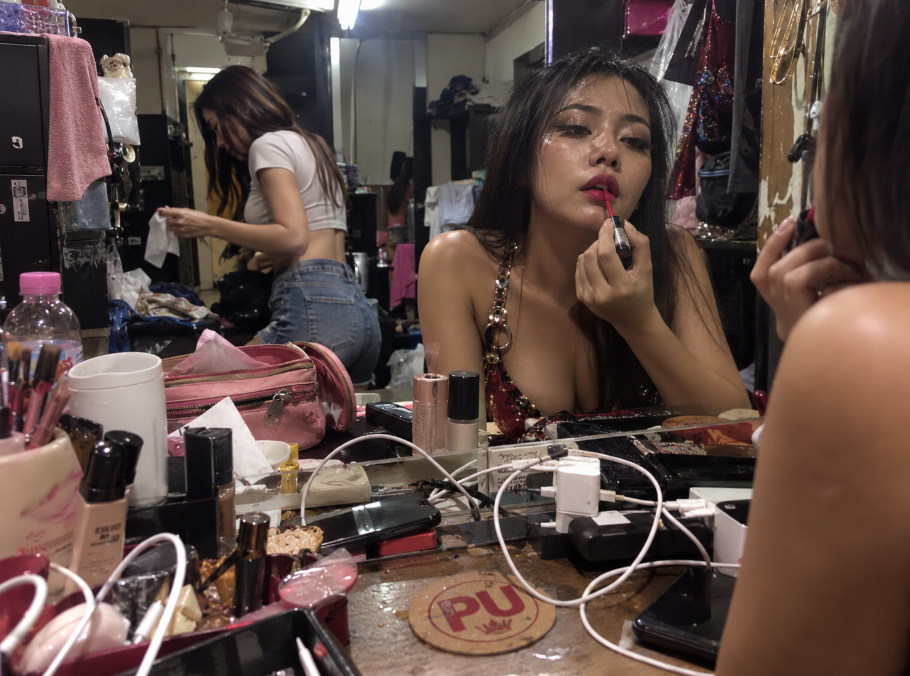
I was sitting in a backstage dressing room off LK Metro talking about luck with a twenty-six-year-old dancer named Nam. She was carefully applying bright red lipstick, preparing for her shift, and bluntly breaking down the divide between the blue-collar workers of the grid and the lottery winners.
“If a girl has duang,” Nam said, watching my reaction in the mirror, “she hits the ultimate industry objective: rub liang (รับเลี้ยง).”
The term translates roughly to being sponsored or taken care of. The man flies back to Stavanger or Sheffield, but he leaves behind a signed lease for a mid-range condo and sets up a standing monthly bank transfer of 30,000 baht. He believes he has rescued her. He genuinely believes his specific brand of affection was so powerful it instantly deactivated her connection to the neon grid.
But Nam told me the absolute truth about the girls with duang: almost none of them actually stop working.
They just become ghosts. When the “husband” is back in Europe, working his shift on a North Sea oil rig to fund her allowance, the lucky girl still quietly walks into a different bar on a busy Friday night. She doesn’t wear her nametag anymore, and she violently avoids anyone holding a camera. She sits in the darker corners, drinks with short-term tourists, and collects bar fines to supplement her monthly salary. According to Nam, she doesn’t do it out of malice; she does it out of pure financial hedging. The grid teaches you that foreign men can disappear instantly—a heart attack, a lost job, a sudden change of mind—and relying entirely on one income stream is a rookie mistake.
When the husband finally books his flight back to Suvarnabhumi, the transformation is flawless. She deletes the LINE app, cleans the condo, buys groceries, and goes to wait at the arrivals gate looking like a devoted, innocent housewife.
The Western men writing on the expat forums always debate whether these women are evil masterminds or tragic victims. But from Nam’s perspective inside the dressing room, they are neither. They are just women who hit the professional jackpot and are trying to double-dip the payout while the machine is still dispensing cash.
“I watch them do this every single week,” Nam told me, staring at her own reflection. “And I don’t feel moral outrage. I only feel a cold, heavy exhaustion, because I know with absolute certainty that I do not possess a single drop of duang.”
She has never met a man who wanted to rent her a room after two nights. She has never received a random transfer on a Tuesday. Nobody is paying her to stay home and watch Thai soap operas. She has to physically clock in, plaster on a smile, and hustle for every single lady drink and every single baht. She is the daily laborer of the grid, entirely dependent on her own grind, sitting in the corner watching the lottery winners complain about how hard it is to hide their second phones.
“Tonight, my friend Joy is leaving her shift early,” Nam said, gesturing to the girl sitting at the next table. “Her sponsor from Helsinki lands in three hours.”
I watched as Joy wiped off her heavy eyeliner and changed out of her neon dress into a plain cotton t-shirt, preparing to play the role of the rescued girl for the next two weeks. Joy was complaining that she would be bored. She was complaining that he snores.
Nam didn’t say anything else to me. She just nodded, handed Joy a fresh makeup wipe, and turned back to the mirror to fix her lipstick. Joy had duang. Nam just had another shift.
Leave a Reply