In late November, the entire rhythm of an Isan village changes. The rice has been cut, threshed, and dragged into the shade. Sitting on a wooden porch, a family silently calculates exactly how many sacks will go to the middleman and how many will be stored to feed themselves for the year. A young woman named Dao sits on the lower step, watching the dust settle over the barren, cracked earth. The harvest is finished, which means there is absolutely no work left in the fields until May. Everyone knows the math, and no one has to ask the heavy question out loud. Someone has to leave to bridge the gap.
There is a fascinating, almost mechanical perfection to how the agricultural calendar of the northeast interlocks with the coastal economy. They are two massive gears syncing up flawlessly. Just as the Isan fields go completely dormant, Pattaya’s tourist high season kicks into high gear. This seasonal migration is a deeply established survival strategy for young women across the region. It is not an exclusive pipeline to the bar industry, either—sociological studies out of Ubon Ratchathani show this exact same seasonal rhythm driving thousands of women into Bangkok’s electronics factories and textile sweatshops. The massive movement of people is dictated by the soil, not just by destiny or a sudden thirst for wealth.
Her departure involves absolutely no cinematic drama. Her mother drops her off at the provincial bus terminal on a rusted saleng, the rattling motorcycle sidecar loaded with a battered suitcase and a plastic bag of sticky rice for the long ride. There are no tearful goodbyes or heavy moral speeches about the city. Both women treat the departure exactly for what it is: a temporary seasonal shift.
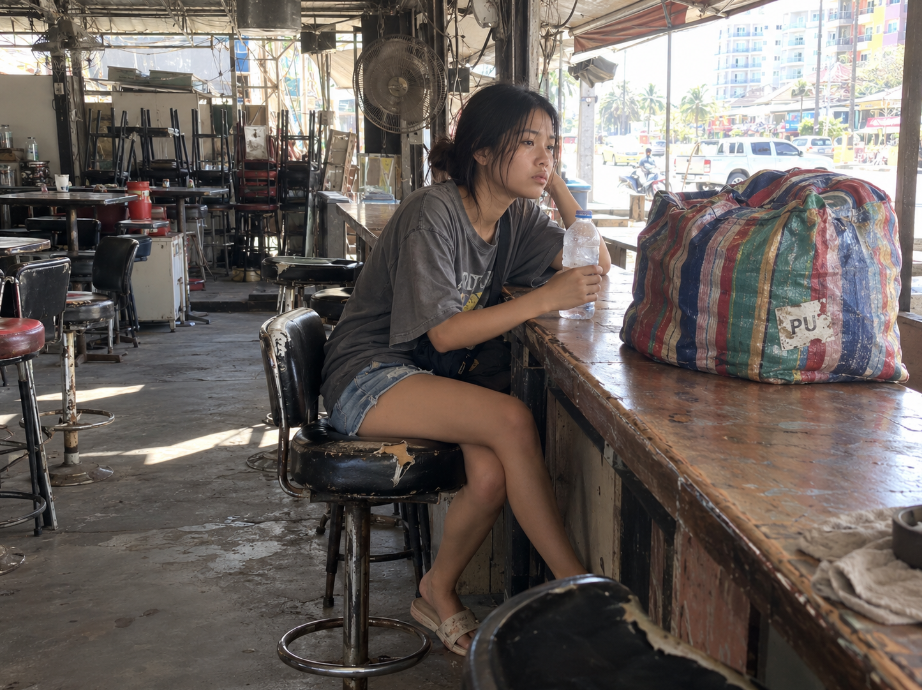
By her first evening behind the counter of an open-air bar in Pattaya, the high season is in full swing. The older, year-round veterans barely glance up from their phones when she walks in. They have seen this a hundred times before. Every November, the staff roster suddenly swells with fresh faces who arrive and leave with the harvest. Dao and the girls who came on the same bus are not industry professionals. They are not hunting for a foreign husband to build them a house, and they are not trying to climb some invisible nightlife ladder. They are purely seasonal contractors, deeply aware that they are only renting their time in the city until the soil demands them back.
As the high season stretches through the winter months, Dao operates on a completely different arithmetic than the career workers. While the veterans are constantly calculating how to secure a long-term sponsor or maximize a monthly allowance, Dao is simply counting the weeks. She isn’t measuring her success by how much wealth she can accumulate to change her life forever, but by how long she can comfortably stay before the cycle resets. Every tip and commission simply serves to fill the financial void of the dry season.
Then comes May. The coastal air grows thick, and the first heavy monsoon rains finally hit the cracked dirt of the northeast. The fields require hands for planting. Dao doesn’t pack her bags because she had a dramatic epiphany or because she finally “escaped” the bar. She leaves simply because the rice is calling. Within forty-eight hours, she steps off a bus in her home province, greets her mother, and wades into the ankle-deep water of the flooded paddies to push green shoots into the soft mud. The ecosystem resets itself without a single word.
Back in Pattaya, June settles in with a quiet, humid heaviness. The tourist crowds have thinned out, and the bar looks hollow. Several bar stools sit empty, leaving foreign managers to complain bitterly about the sudden unreliability of their staff, completely failing to realize they are trying to argue with the agricultural calendar. No one asks where Dao went. No one knows if she will return next November, if she will find a factory job instead, or if she will simply stay in the village forever. The question just hangs quietly in the damp coastal air, waiting for the next harvest.
Leave a Reply