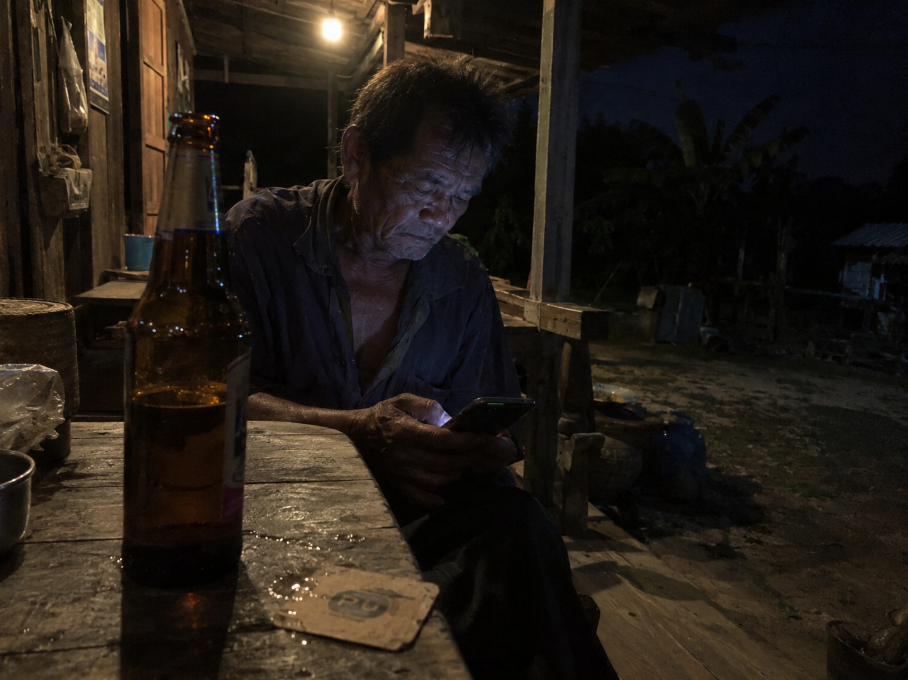
The air in Roi Et is thick with the evening heat and the faint, sweet smell of burning rice stalks. A sixty-year-old man sits on his raised wooden porch, a half-empty bottle of Leo beer sweating on the table beside him. He holds his cracked smartphone up to his neighbor, tapping the screen with a calloused thumb. It’s a photograph of his daughter. She is standing in front of a generic hotel entrance in Pattaya, wearing a crisp, dark uniform, a plastic nametag, and a bright, rehearsed smile.
“My daughter,” the father says, his chest swelling slightly in the fading light. “She works at a big hotel. Good job. Good money.”
The neighbor nods slowly. He looks at the screen, but his eyes are carefully blank. He doesn’t say a word. He won’t point out that the uniform fits a little too tightly, or that the lighting looks more like a cheap short-time rental than a luxury resort. He stays silent because if he speaks, he would have to explain exactly how he knows the difference. And that would mean admitting where his own daughter works, and that he, too, is playing the exact same game of silence.
The father puts the phone away. He is proud. He does not know. Or perhaps he does, but he has built an impenetrable fortress around his pride to ensure he never has to acknowledge it.
Anthropologists who spend years studying the villages of Isaan often document a profound, unwritten contract within families tethered to the neon grid of Pattaya. It is a system built on a deeply complex form of collective delicacy. The parents usually suspect, or outright know, how the money arrives in their bank accounts on the first of every month. The daughter knows that they know. But the truth is never spoken aloud. It is not hypocrisy; it is a vital social mechanism that allows everyone to survive with their dignity intact. It allows the daughter to remain the luuk katanyu—the ultimate grateful child fulfilling her eternal debt of bunkhun. It allows the mother to remain respected in the village market.
Ignorance, in this world, is an active, exhausting choice. The father chooses not to know because knowing requires thought, and thought breeds agony. He sees the results of her labor: the rusted tin roof replaced with fresh tiles, a new Honda Wave parked under the house, the younger brother’s school fees paid in full. He sees the survival of his bloodline. He actively chooses not to look at the price tag. Asking questions would mean confronting his own failure to provide for them. It would mean breaking the fragile glass house they all live in, admitting that he could not protect her from the brutal economics of their country. So, he tells the neighbors she works in a hotel. He forces himself to believe it.
But the modern world is cruel, and algorithms do not care about the delicate pride of Isaan farmers.
One evening, it happens. Not from malicious village gossip, but from a careless swipe on TikTok. The father is scrolling through videos, and suddenly, there she is. Not in a hotel lobby. In a bar. The neon lights blur across his screen. She is holding a beer, wearing a tiny outfit, flashing that exact same smile as she leans against a sweating, older foreign man. The screen freezes for a second as the rural internet buffers.
In that single second, the hotel lobby burns to the ground. He finally knows.
When a father reaches this point of no return, the collapse happens in different ways. Some men, the ones who always secretly knew, simply accept it, recognizing that the alternative was crushing poverty and the loss of their land. Some men, however, break entirely. They are crushed by a paralyzing cocktail of shame and anger—not at their daughters, but at themselves. They refuse the money, they stop talking to her, and the family slowly starves, collapsing under the weight of a sudden, brutal morality. They realize too late that knowing the truth was far worse than the lie.
But this father takes the most common, most heartbreaking path of all.
He stares at the frozen frame on his phone, his heart pounding heavily against his ribs. Then, he closes the app. He doesn’t tell his wife. He doesn’t call his daughter to scream or cry. He carefully packs the visceral image of the foreigner and the neon lights into a dark box in his mind and locks it away forever. He will continue to tell the neighbors she works at the hotel. He will continue to accept the bank transfers. He chooses aggressive, deliberate blindness. It is not weakness. It is the only way to survive.
He sits on the porch as the evening turns pitch black. He knows. She knows he knows. He knows she will never say it, and she knows he will never ask.
When she comes home for the New Year, they will perform the sacred dance. They will hug. She will hand him an envelope of cash. They will sit on this very porch and talk about the weather, the rice harvest, and the neighbors. They will not talk about Pattaya. They will never talk about the video.
The father puts his phone in his pocket and takes a slow pull from his warm beer, staring out into the dark fields. He forces his mind to go completely blank, because he is simply too tired to feel the pain. Resting on the wooden table beside his bottle is a cheap, soggy cardboard coaster with a faded “PU” logo. She brought it back from Pattaya in her purse on her last trip and left it there by accident.
He doesn’t throw it away. It just sits there in the dark. A silent witness. A tiny piece of a reality he will spend the rest of his life pretending not to see.
Leave a Reply