There were two men permanently pinned to the top of Nan’s LINE chat history, and the contrast between them contained the entire psychological absurdity of this city.
The first was Art. He was twenty-six, with sharp features, a geometric tattoo wrapping around his neck, and an infuriatingly charming smile. He worked sporadically at a customized motorbike shop in East Pattaya. He was her actual boyfriend, the man she slept next to most nights, the man she cooked for, and the man who held the absolute center of her emotional gravity.
The second was Marcus. He was thirty-eight, a commercial electrician who ran a small contracting crew in Newcastle. He visited Thailand exactly twice a year, in February and November, staying for exactly eighteen days each time. For the past three years, he had paid a negotiated daily rate for her company when he was in town, and he sent a modest, fixed allowance when he was back in the UK. He was, by every technical definition of the industry, a customer.
The deeply uncomfortable problem that had begun to keep Nan awake at night was not the moral complication of having both of them in her life. The problem was that the man paying for a temporary illusion was vastly better at being a partner than the man she was actually in love with.
The disparity wasn’t just about money. It was about the basic mechanics of human reliability.
When Art said he would be home by eight o’clock in the evening to have dinner with her, there was a fifty percent chance he would roll in at midnight, smelling of cheap whiskey and defensive anger. If she complained, the argument would escalate instantly. He would yell, slam the thin plywood door of their apartment, and disappear for another twenty-four hours, leaving her to cry out of sheer emotional exhaustion. He borrowed money “for a few days” to buy parts for his Honda PCX and became hostile when she gently reminded him about it weeks later. He was deeply, chaotically important to her, yet he constantly made her life heavier.
Marcus operated on an entirely different frequency. He was a man who respected schedules, agreements, and boundaries. When Marcus was in his home country and promised to call her at 4:00 PM Thai time on a Sunday, her screen would light up at exactly 3:59 PM. He never yelled. He never demanded explanations. Three months before his scheduled flights, he would send her a clean screenshot of his itinerary so she could arrange her life without stress. If she was sick and missed a message, he didn’t launch into a jealous interrogation; he simply asked if she had taken medicine and told her to rest.
The cognitive dissonance reached its breaking point on a Tuesday afternoon during the monsoon season.
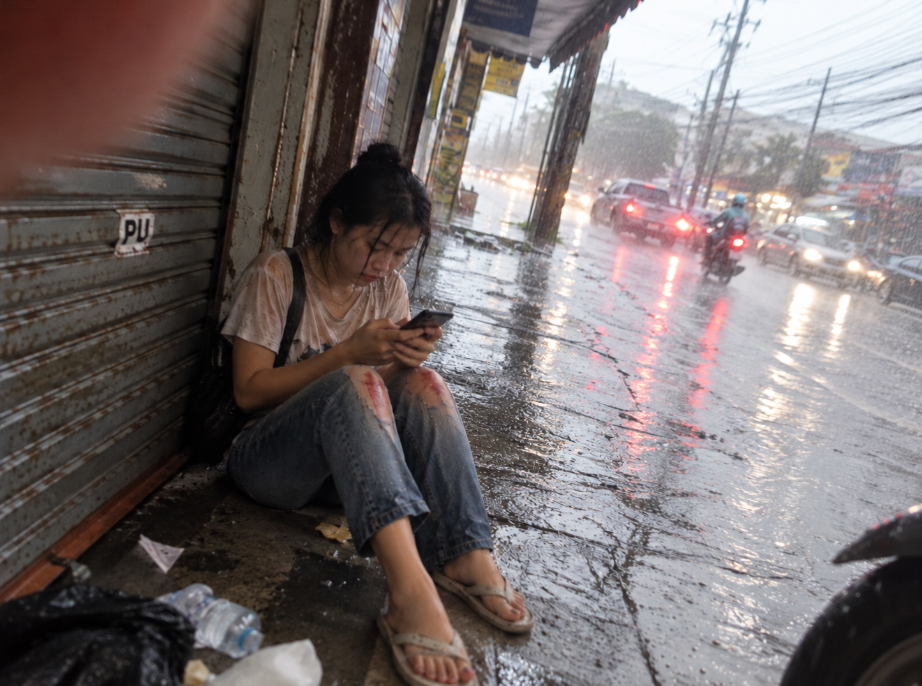
Nan was driving down Sukhumvit Road when her rear tire blew out, sending her skidding onto the wet, oily asphalt. She wasn’t seriously injured, but her knees were badly scraped, the bike was undrivable, and the sky was dumping sheets of heavy coastal rain. Shaking and soaked, she dragged the heavy scooter under the narrow awning of a closed repair shop and immediately called Art.
He answered on the fourth ring, sounding annoyed over the background noise of a snooker hall. When she explained she had crashed and was bleeding, his first reaction wasn’t concern—it was a heavy sigh of irritation. He asked how badly she had damaged the bike. He told her he was busy with his friends, that she should just find a motorbike taxi, leave the scooter there, and figure it out later. Then he hung up.
Nan sat on the wet concrete, leaning against the rolling metal shutter of the shop, watching the rain flood the street. She didn’t cry because of the scraped knees. She cried because of the absolute, crushing loneliness of being in a relationship with someone who fundamentally did not care about her peace of mind.
Just to distract herself from the cold, she opened her phone. There was an unread message from Marcus, sent an hour earlier from a rainy job site in England: “Hope it’s not pouring too hard there today. Have a good afternoon.”
She didn’t ask him for money. She just typed back that she had fallen off her bike and was stuck in the rain.
Marcus didn’t ask about the damage to the scooter. He didn’t tell her to figure it out. Despite being nine thousand kilometers away, he immediately shifted into a mode of quiet, practical care. He asked her to drop her GPS pin. He told her to walk to a nearby cafe to get out of the rain, ordered a Grab SUV to her exact location using his linked credit card, and stayed on the line with her until the car arrived. The next morning, he checked in to make sure she had cleaned the wounds properly. He didn’t ask for gratitude, and he didn’t use the incident as leverage. He just solved the problem.
A few days later, Art finally noticed the bandages on her legs while he was playing a game on his phone on their sofa. He asked if it still hurt, barely glancing up from the screen.
Nan looked at him—young, handsome, and entirely useless as a shelter against the realities of the world. Then she thought about the thirty-eight-year-old electrician who paid for her time but treated her with the careful consistency of a husband.
The industry trains everyone to believe that the transactional relationships are the fake ones, while the organic, romantic relationships are the real life you return to. But as Nan watched Art throw his phone onto the couch and complain about his friends, a quiet, terrifying realization settled into her mind.
She wasn’t sure what defined a real partner anymore. If love meant endless anxiety, unkept promises, and sitting alone in the rain, then she didn’t want it. And if a commercial transaction was the only place she could find respect, reliability, and someone who actually kept their word, then maybe the illusion was the only thing worth holding onto.
Leave a Reply