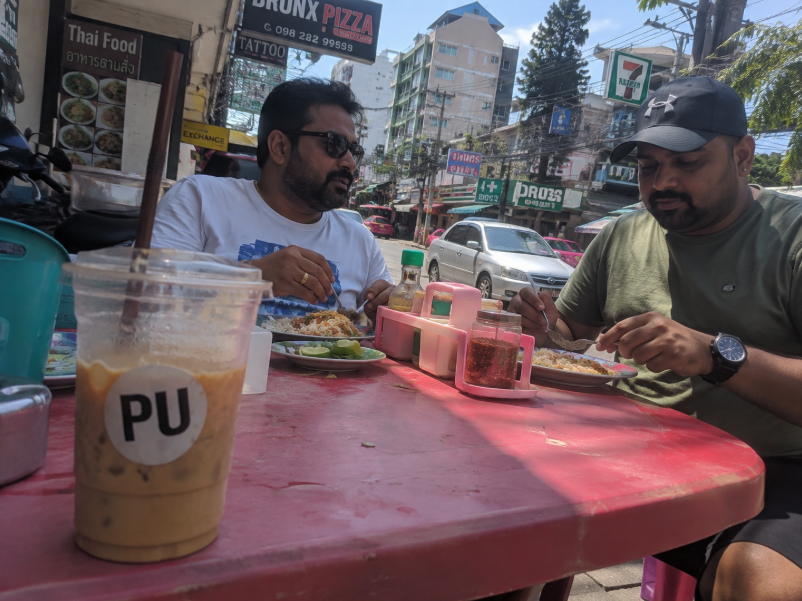
Disclaimer: Pattaya Unfiltered usually analyzes the city through the lens of the Western expat ecosystem. But the demographic reality of the city is shifting rapidly. Recently, an Indian reader reached out to offer a view from the inside of a massive, parallel economy that operates with its own rules, biases, and infrastructure. Personal identifying details have been removed.
You spend a lot of time analyzing the Western dynamic in Pattaya, but there is an entirely different ecosystem operating right next to it. As an Indian professional who regularly visits Thailand, I read the comments and see the stereotypes. I am not going to pretend there isn’t a problem with some of the behavior, but the reality of the Indian ecosystem in Pattaya is much more nuanced than a lot of people realize.
Here is how the machine actually works from our side.
The Economics of Proximity
To understand why Pattaya attracts so many Indians, look at the basic math. A flight from India takes about four hours. Once you land, hotels, food, entertainment, and alcohol can be considerably cheaper than in major Indian metros like Mumbai or Delhi. For the growing Indian middle class, Thailand represents a highly accessible international holiday. Tour operators are moving hundreds of tourists through this pipeline every single day.
The Infrastructure of the Night
Fifteen years ago, there was essentially one prominent Indian club: Tony’s. Then Nashaa arrived. Today, there are roughly a dozen large-scale Indian-oriented clubs and venues.
This economy is significant, and the pricing reflects it. A beer in these clubs can cost 350 baht. The adult entertainment ecosystem operating around these venues has established its own clear market rates. Short-time prices generally start around 3,000 baht, long-time around 5,000 baht, and scale up to 10,000+ for Russian or Uzbek women.
But what outsiders miss is how integrated this market has become. You will notice that many working women around Walking Street and Beach Road now know basic Hindi phrases. This isn’t an accident; many Indian tourists don’t speak fluent English, so learning Hindi is simply a smart business adaptation. And the transactional boundaries frequently blur—some women develop genuine, long-term relationships with regular Indian customers, eventually traveling to India to meet their “boyfriends.”
The Cultural Bridge
The relationship between the two cultures isn’t just “tourists bringing cash.” There is a deep, preexisting cultural familiarity. Thai culture is heavily influenced by figures like Buddha, Ganesha, and Lord Rama. On a modern level, Bollywood has a surprising footprint here. I’ve met Thai women in the industry who know Indian songs and movies perfectly, spending their days off watching Indian cinema in hotel rooms with their customers. There is a two-way cultural curiosity that already exists before the bar fine is ever paid.
The Shock of the Grid
I will not pretend there isn’t a behavioral problem. There is.
In India, venues with this kind of open, unrestrained nightlife and adult entertainment are heavily restricted. When some men—often from smaller towns, with zero exposure to international travel—suddenly drop into the absolute freedom of Pattaya, they experience a severe culture shock. They simply do not know how to behave. They display poor manners and zero civic sense.
Unfortunately, those specific individuals are incredibly loud and visible, and they end up creating the brand image for an entire nationality of 1.4 billion people.
The Identity Blur
There is also a significant identification issue. People on Walking Street often assume anyone who looks South Asian is Indian. Pakistanis, Bangladeshis, and Sri Lankans frequently get grouped under the same label. Sometimes, people from these countries even identify themselves as Indian for convenience—much like how Pakistani restaurants in North America often market themselves as “Indian food” simply because the label is instantly recognizable. When a South Asian tourist misbehaves, the default assumption is “Indian,” even if the passport says otherwise.
The Demographic Selection Bias
This is the most critical point. The Indians you see walking in large groups down Beach Road are not a representative sample of India.
A wealthy, well-traveled Indian has an enormous number of choices: Europe, Japan, Australia, Dubai, the US. The demographic that specifically chooses Pattaya is naturally skewed toward those seeking an affordable holiday focused on aggressive nightlife and the adult entertainment scene.
There is an entirely different demographic of Indian professionals who use Thailand simply as a quiet, neutral meeting point to gather dispersed family members from across the globe. We come for the food, the infrastructure, and the peace. But you don’t see us making a scene in a Walking Street agogo, so we remain invisible.
Pattaya has built a massive, highly profitable Indian ecosystem. If you start looking past the loud groups on the street and talk to the Thai women and business owners who actually operate inside this parallel economy, you will find a very different story. It isn’t just about bad behavior. It’s about repeat customers, deep cultural exchange, calculated business, and genuine human connections.
Leave a Reply